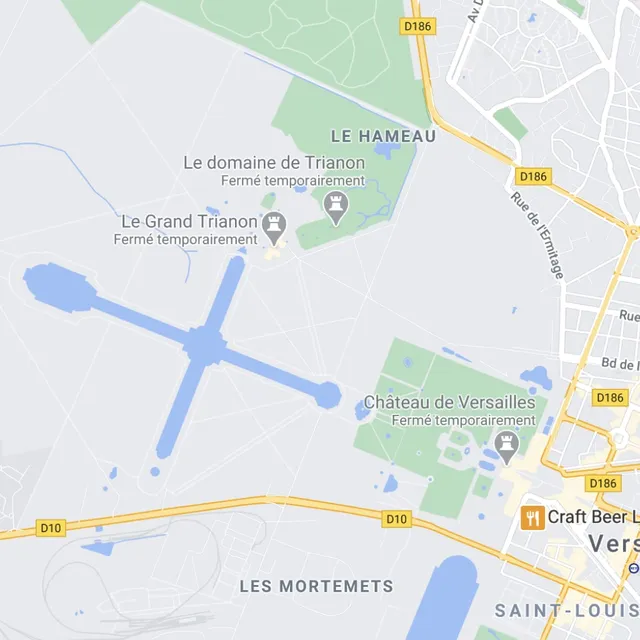


Take advantage of the last two weekends of access (until September 27, 2026) to the Jardin du Parfumeur to reconnect with the atmosphere of 17th-century gardens. Located at the orangery of Châteauneuf, in the heart of the estate of Trianon, this new garden with hundreds of essences of flowers, tells the story of perfume and its uses at the court of Versailles. This project was made possible thanks to the patronage of Maison Francis Kurkdjian.
The Perfumer’s Garden
EPV / Thomas Garnier
Perfume at Versailles
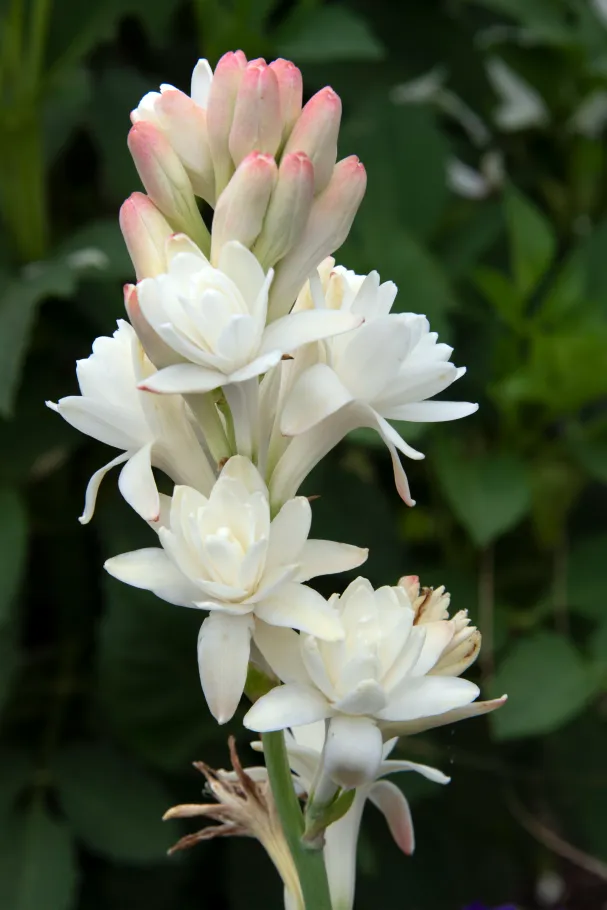
When Louis XIV had the Porcelain Trianon built, to be replaced in 1687 by the Grand Trianon, the gardens were overflowing with strongly scented flowers: jasmine, tuberoses and hyacinths. Their fragrances filled the paths and parterres, which flowered all year round, thanks to a system of hothouses.
This passion for flowers and their unique perfumes made Versailles the birthplace of the profession of perfumer in the 17th century. The court was amazed by the unique fragrances in the gardens, and smelling good became a true obsession for both the sovereigns and the courtesans. Artisans supplied them with increasingly sophisticated products: fragrances, sachets, and even perfumed fans and gloves.
In the 17th century, there was a significant boom in the cosmetics industry, following the development of personal hygiene. The profession of perfumer became particularly fashionable, with more and more people taking it up, including Claude-François Prévost, supplier of scent to Queen Marie Antoinette.
The Perfumer’s Garden
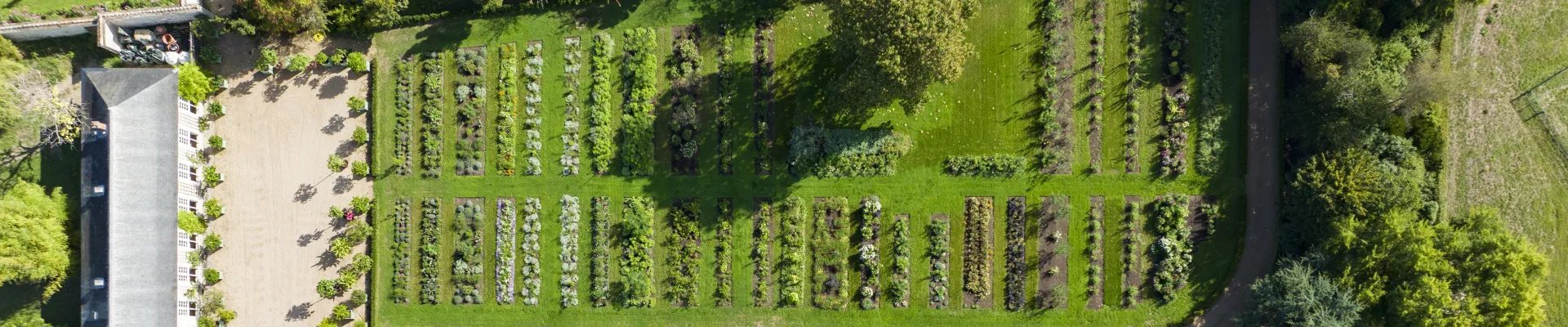
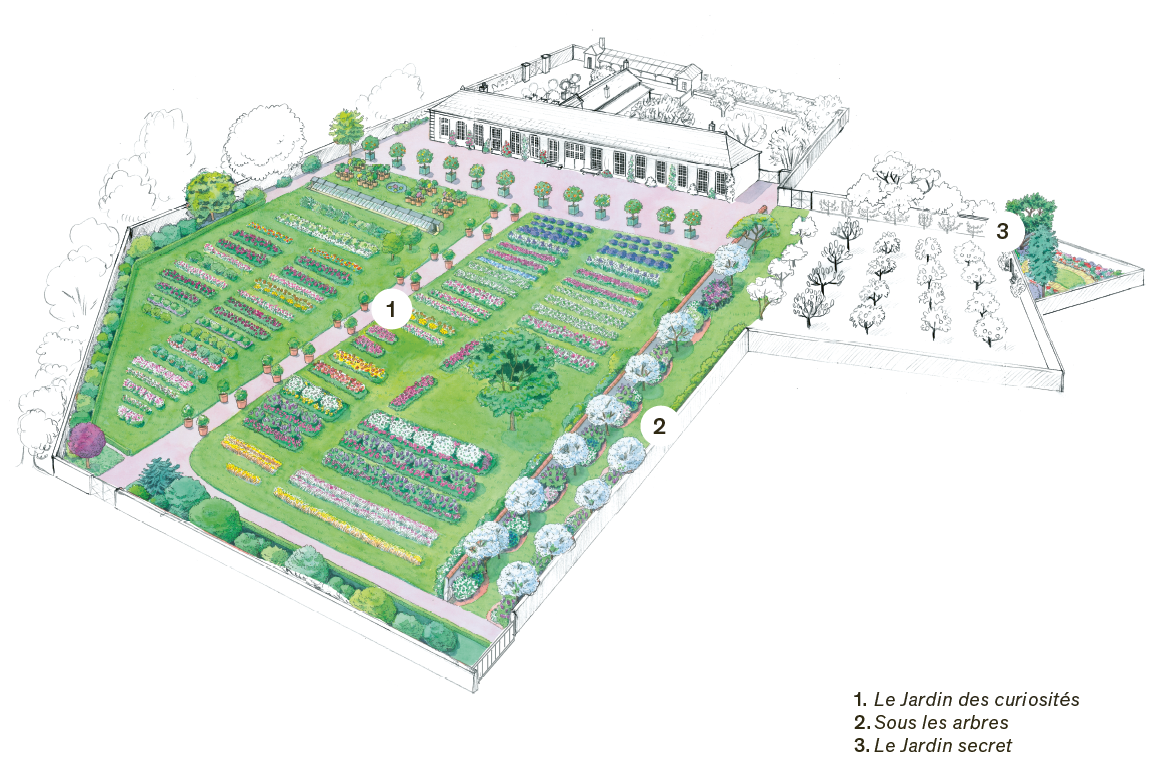
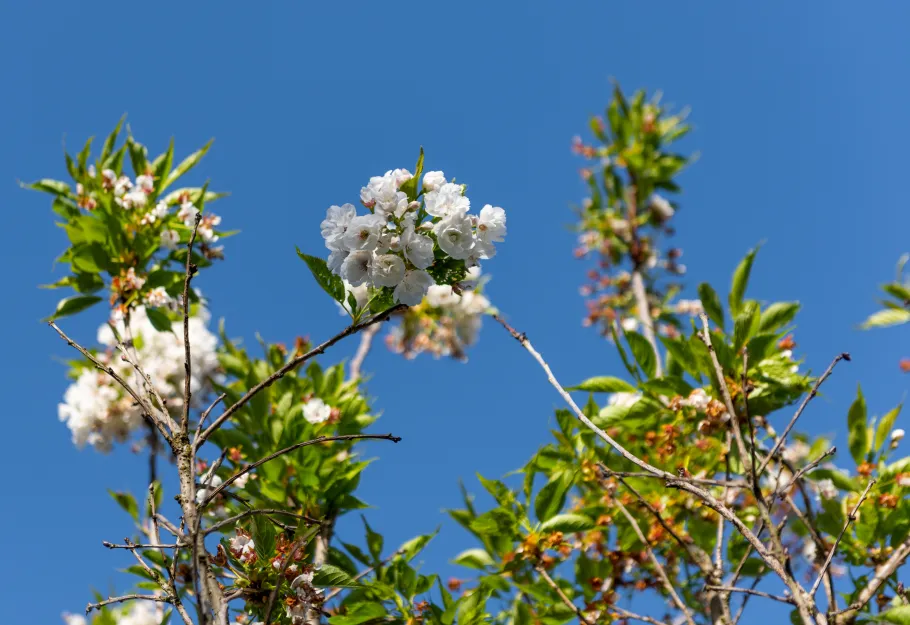
The Perfumer’s Garden is home to hundreds of flower essences: historic plants (roses, jasmine, etc.), some with unique fragrances (chocolate, apple, etc.), others with unpleasant odours, and even so-called “mute” flowers like hyacinths, peonies or violets. Located around the Châteauneuf Orangery, the first flowers have been planted around its paths and parterres since the summer of 2022, to ensure optimal flowering for the opening of the Garden. This is especially the case for the Japanese cherry trees, which form a large floral path, connecting the garden opposite the Orangery and the “secret” garden with a more intimate atmosphere.
"The Garden of Curiosities"
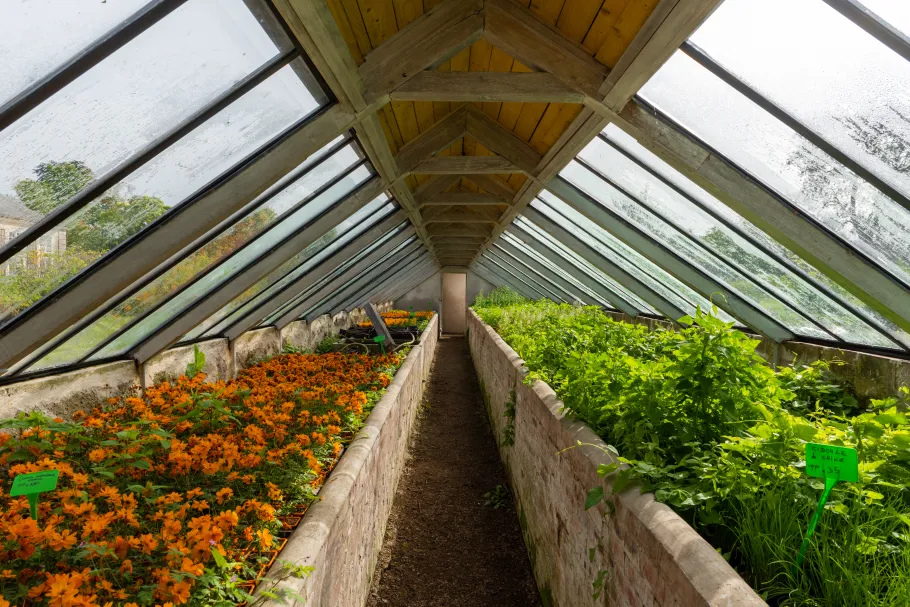
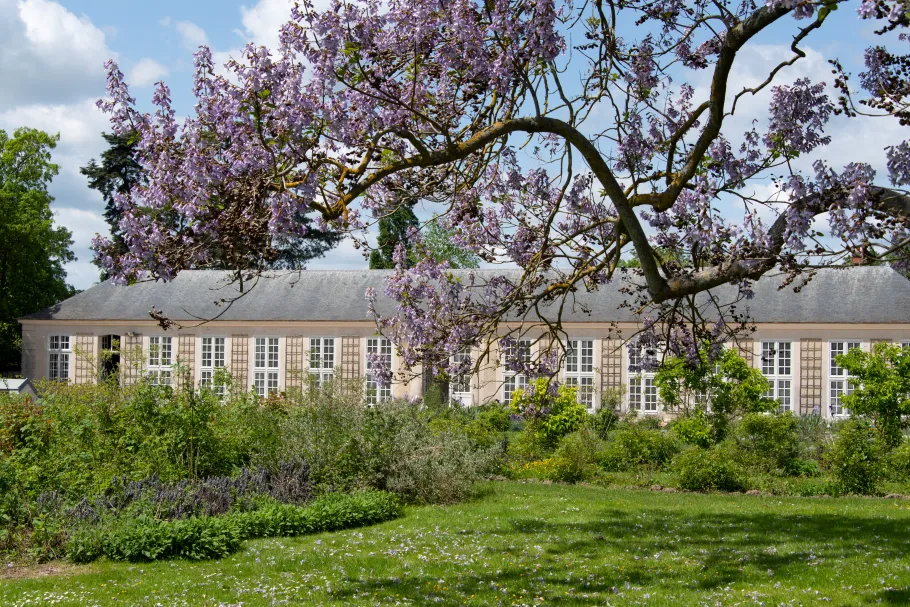
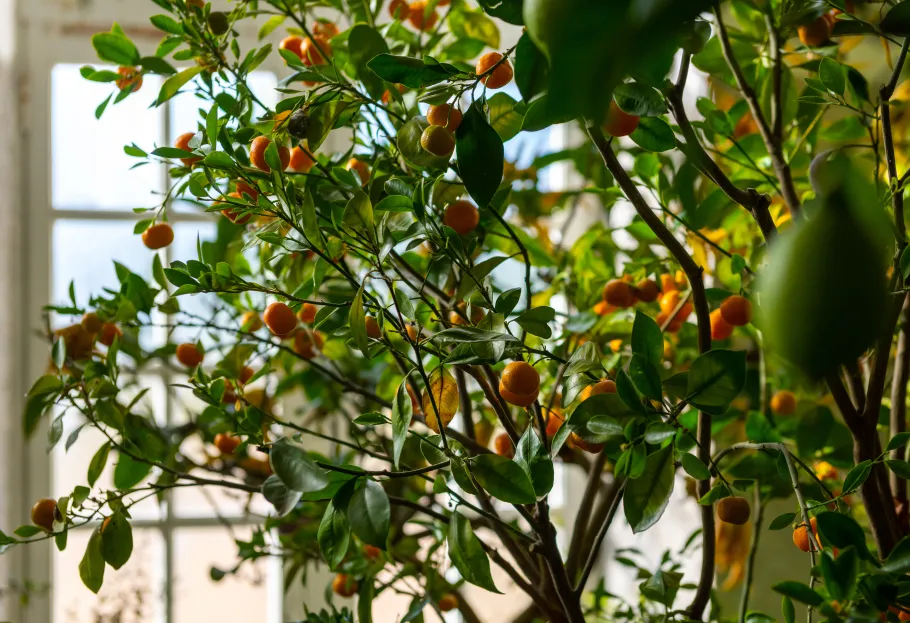
This garden, facing the Orangery, features the majority of the plants arranged in several flowerbeds, overlooked by the great Paulownia, an imperial tree that bursts into flower in spring. A sunken greenhouse makes it possible to grow herbs and certain plants all year round thanks to its constant temperature. The garden's paths are lined with potted citrus trees, oranges and lemons, whose fruit will be visible in summer.
"Beneath the Trees"
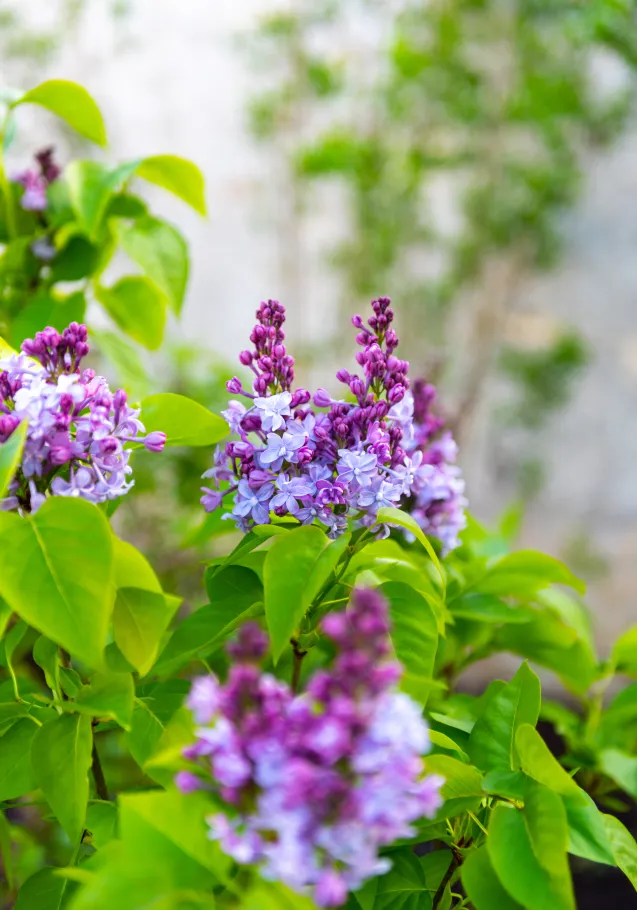
This flower-lined path of Japanese cherry trees is made up of several planted beds containing fragrant plants and shrubs such as rustic jasmine, lilacs and mock orange, with their light, distinctive scent.
"The Secret Garden"
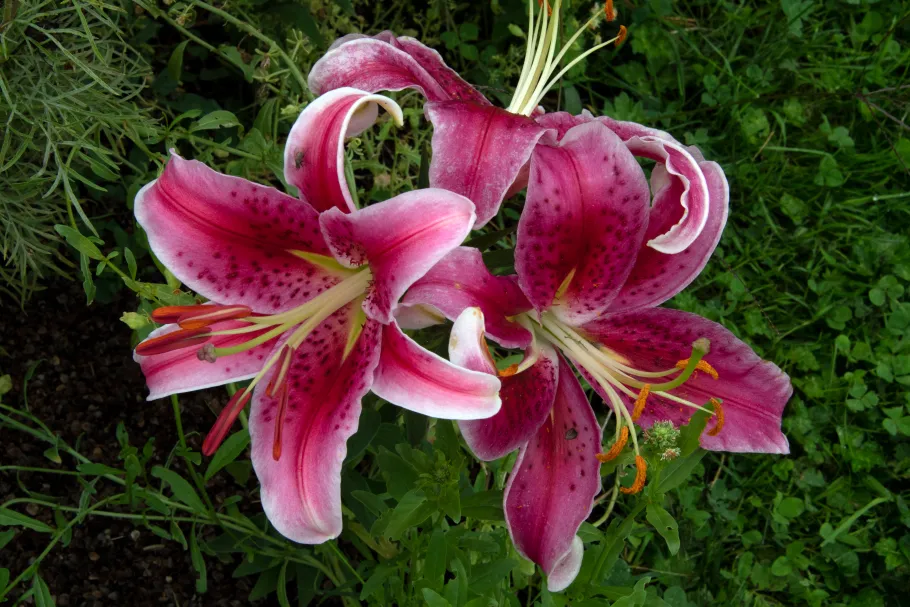
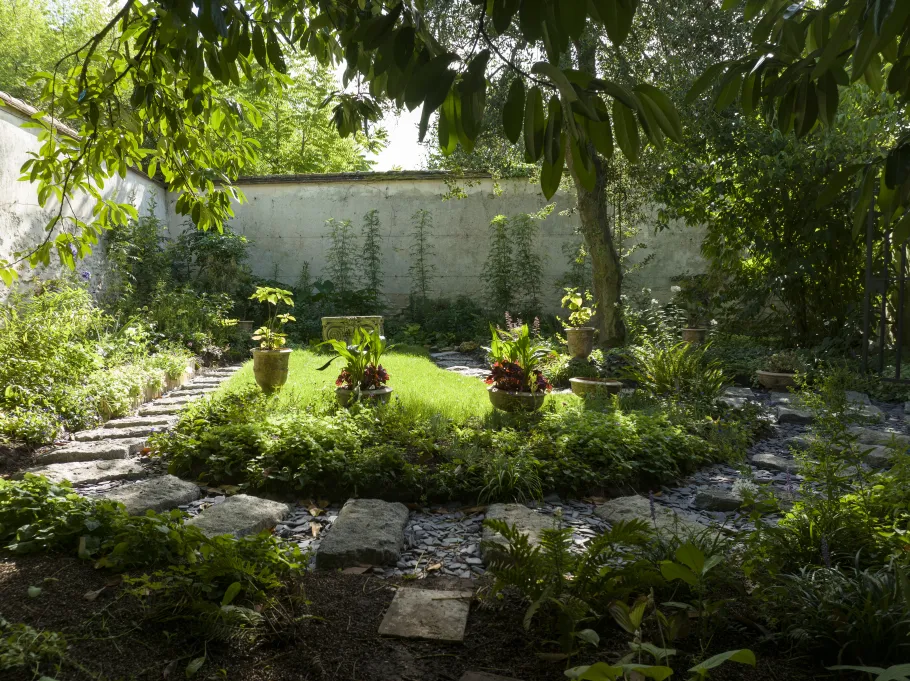
Finally, visitors must cross the orchard, made up of several dozen fruit trees, to discover "The Secret Garden," with its more intimate atmosphere. Enclosed by stone walls, it is entered through a gate. A semi-shaded garden is laid out with natural stone stepping stones, so that visitors feel as though they are walking across a river as they wander through it, discovering perennials and unusual plants that bloom at different times of the year. Beneath an immense Caucasian wingnut tree, orchids, roses and giant Himalayan lilies grow side by side, naturalizing and adapting to their surroundings. A bench invites visitors to sit and take in a lovely view over this meditative garden.
This project is the fruit of incredible teamwork between the Trianon gardeners and Maison Francis Kurkdjian.
practical information
The Perfumer’s Garden is open free of charge and is accessible from the Bassin du Trèfle via the chemin creux. It is open to all visitors for self-guided visits every weekend during the "Gardens of the Enlightenment" exhibition, from 9 May to 27 September, from 12 pm to 6.30 pm (last admission at 5.45 pm), and is also accessible as part of guided tours (in French only).
The Perfumer's Garden will be exceptionally closed on Saturday, June 13.
The access to the garden is remote and made up of cobblestone surfaces, which can make it very difficult to reach.
Photos
EPV / Sébastien Giles
EPV / Didier Saulnier
EPV / Sébastien Giles
EPV / Didier Saulnier
EPV / Thomas Garnier
EPV / Thomas Garnier
EPV / Didier Saulnier
EPV / Sébastien Giles
visits - workshops
The patronage of Maison Francis Kurkdjian
The creation of the Perfumer’s Garden has been possible thanks to the patronage of Maison Francis Kurkdjian. The relationship between Palace of Versailles and Marc Chaya and Francis Kurkdjian, co-founders of the eponymous Maison, dates back several years, and includes in particular the Night Fountains Show, when Francis Kurkdjian curated an olfactory experience in the gardens and the recreation of Marie Antoinette’s perfume, Sillage de la Reine (the Queen’s Wake), based on historical documents.
In 2022, Maison Francis Kurkdjian has been delighted to become the sponsor of the Perfumer’s Garden, thereby deepening its commitment to the Palace of Versailles.
Since 2017, the Estate of Versailles has been implementing a management plan aimed at improving the understanding, preservation, and enhancement of the biodiversity within its park. In 2024, Maison Francis Kurkdjian strengthened its patronage of the Palace by supporting the creation of a Biodiversity Observatory.

Exhibition
Gardens of the Enlightenment
The exhibition “Gardens of the Enlightenment, 1700–1800,” held from May 5 to September 27 2026 at the Grand Trianon, offers a unique insight into landscape gardens in the 18th century, through nearly 160 works.
Column
Biodiversity
The Estate of Versailles, which is famous for its Palace and formal French gardens, is also a remarkable but little-known haven of biodiversity. In 2017, an ambitious management plan was launched to better understand, preserve and showcase this unique ecosystem shaped by centuries of interaction between man and nature.
Patronage
Admirable Trees
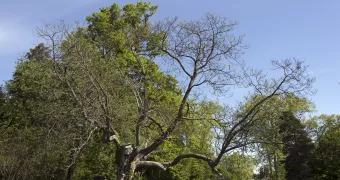
The Palace of Versailles is aiming to draw attention to these trees with a walking tour that will allow visitors to locate and learn more about them.