


A Sèvres “fond rose” (pink ground) porcelain mustard pot belonging to Louis XV has entered the collections of the Palace of Versailles thanks to the patronage of the Fondation La Marck.
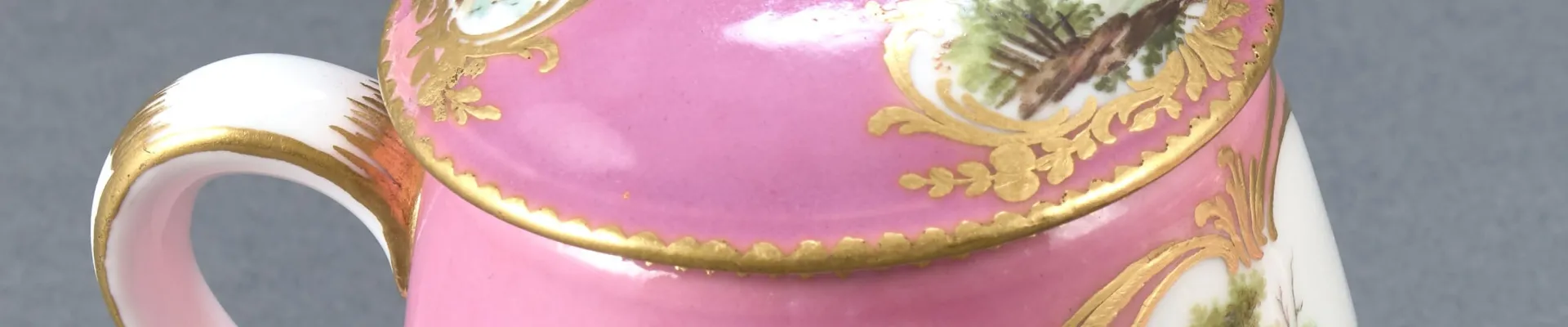
Acquisition of a Sèvres pink ground porcelain mustard
© Château de Versailles, Dist. RMN © Christophe Fouin
The Mustard Pot
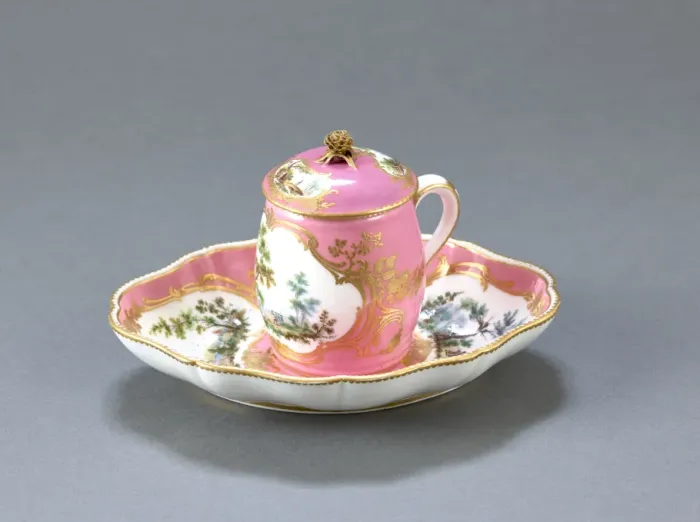
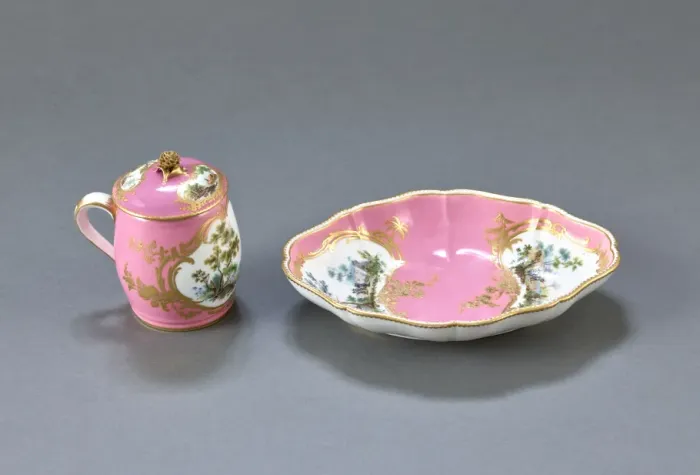
Patronage from the Fondation La Marck has allowed the Palace of Versailles to acquire a Sèvres “fond rose” (pink ground) porcelain mustard pot with its stand, once owned by Louis XV. These pieces, decorated with hunting scenes, are particularly rare, seeing as the Palace of Versailles had up to this point not retained any pink-ground porcelain from Sèvres. The mustard pot will be presented as part of the recently opened Porcelain Room.
Through this acquisition, the Palace of Versailles furthers its goal of enriching its collection of royal porcelain.
© Château de Versailles, Dist. RMN © Christophe Fouin
© Château de Versailles, Dist. RMN © Christophe Fouin
In Marie-Laure de Rochebrune’s words
Marie-Laure de Rochebrune, head conservationist in charge of porcelain, reflects on the acquisition of these two exceptional, pink-ground porcelain pieces.
What is the backstory of this mustard pot?
This superb Sèvres pink-ground porcelain mustard pot entered the collections of the Palace of Versailles after being acquired last July at a Christie’s auction, thanks to support from the Fondation La Marck.
This mustard pot, along with its cover and accompanying stand, were part of a small, 52-piece service named the Service Rozes attributs de Chasse (“Pink Service with Hunting Pattern”). This consisted of pink-ground Sèvres porcelain pieces decorated with a hunting motif. Louis XV bought the mustard pot from Madame Lair, a marchand mercier, who had bought it herself in December 1759.
These are the first pink-ground pieces integrated into the royal porcelain collection. In 1782, Louis XVI purchased further pieces, such as a mustard-pot cover, likely to replace a damaged piece. In 1784, the Rozes attributs de Chasse service was eventually transferred to the Château de Rambouillet.
The first time Christie’s sold this piece was in July 1884, at the death of Lady Raglan, who had 12 pieces from that service, at that point referred to as the Service rose du Barry. The last confirmed owner was Baron Schröder.
Why is this acquisition particularly important for the Palace of Versailles?
Pink-ground porcelain pieces are rather rare and were a major innovation for the era. The first pieces weren’t produced until 1757, since technical challenges made their creation particularly difficult. Pink-ground porcelain pieces were sold after 1758 during the Manufacture de Sèvres sales that took place at Versailles in what is now the site of madame Du Barry’s Apartment.
The mustard pot stands out for its decoration as well: the scenes of hunting with guns that decorate it constitute a rather unique theme, likely inspired by Saxon porcelain created by the Meissen factory. This mustard pot is even more remarkable because it belongs to a small service with few pieces, some of which we have lost track of. Thus, opportunities to acquire pieces from this service are extremely rare. What’s more, we had the opportunity to acquire the stand and cover that came with the mustard pot. It was very lucky for us to have been able to acquire these unique pieces.
What is the role of patronage in acquiring new porcelain pieces?
Generally, patronage (whether from businesses or individuals) plays an important role in allowing us to reconstitute collections of royal porcelain. For example, a plate from Louis XVI’s mythology-inspired service was acquired thanks to a bequest from Madame Heymann, while the patronage of LVMH allowed the acquisition of two pieces of national importance: Madame Victoire’s set of three green-ground vases in 2013, and the little Siamese jug in 2018.
The Fondation La Marck, in particular, has for several years played a central role in rebuilding the collections of royal porcelain. In fact, the patronage of the Fondation La Marck allowed for the creation of the Porcelain Room, completed in December 2019. This Room highlights the royal porcelain collections and has enjoyed significant success, with visitors discovering it on guided tours of the King’s Apartment.