

Versailles and American Independence
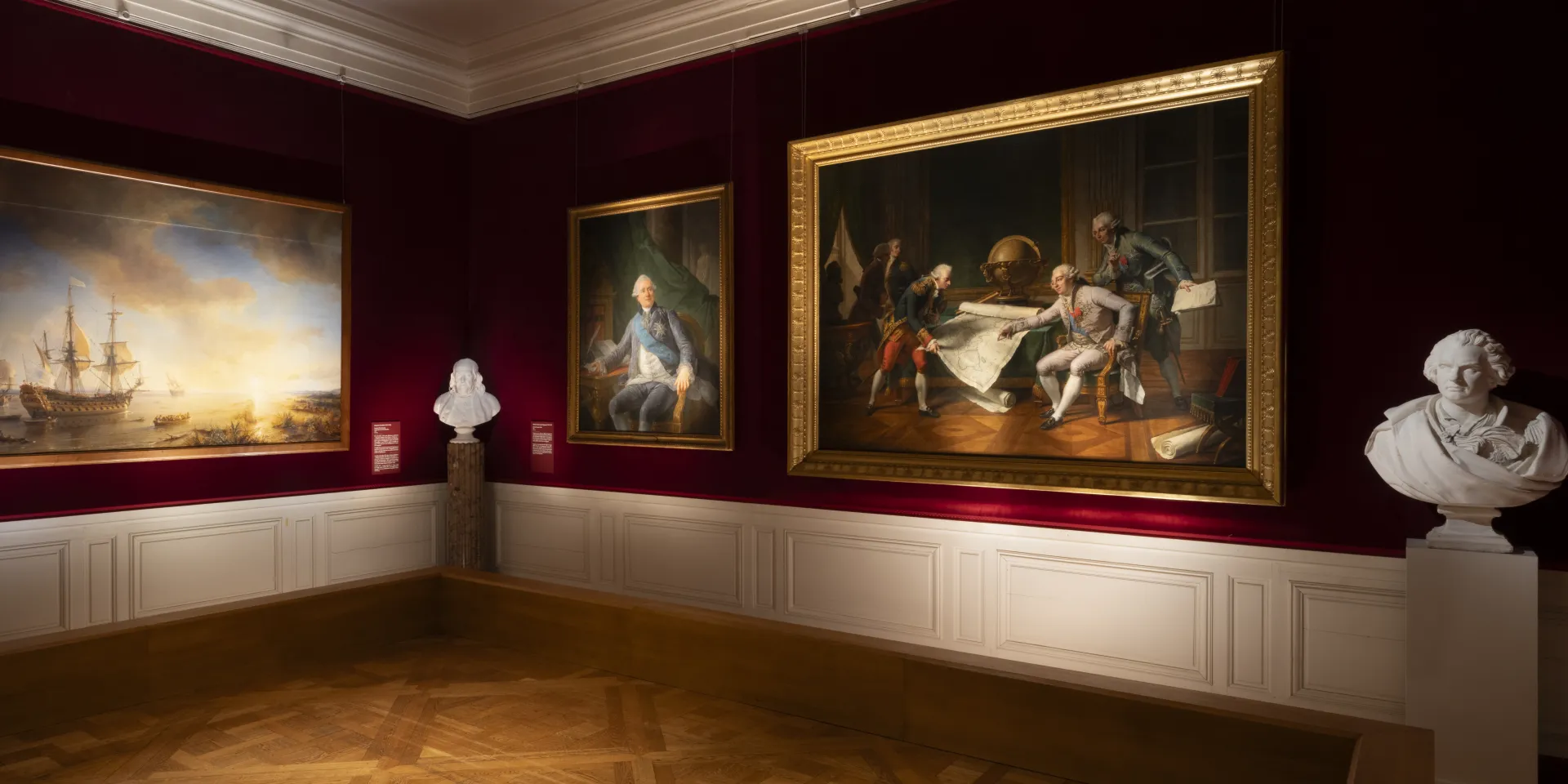
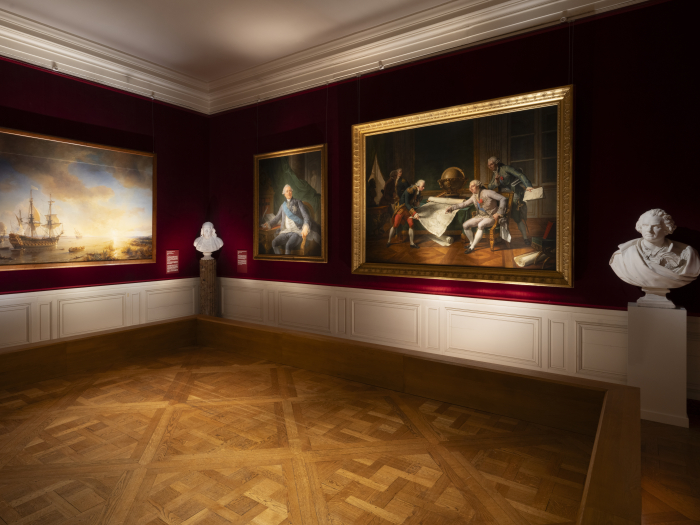
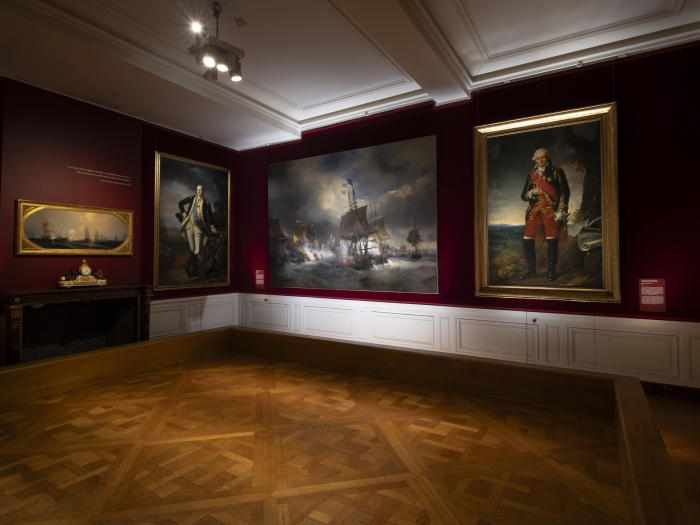
On the 4th of July 2026, to mark the 250th anniversary of the United States Declaration of Independence, the Captain of the Guards' Apartment will reopen to the public with a new exhibition dedicated to this major chapter in history. Designed around paintings and sculptures from the collections of the Palace of Versailles, the new galleries occupy three rooms of the apartment and highlight the decisive role played by France in the American War of Independence.

The first room explores the diplomatic relations between France and America during the 17th and 18th centuries. The second room is devoted to the military engagements in the conflict, as well as the French and American figures who distinguished themselves during the war. Finally, the last room focuses on the return of peace, particularly marked by the signing at Versailles, on the 3rd of September 1783, of one of the treaties that brought the war to an end.
the apartment of the captain of the guards
At Versailles, Louis XIII had already given an important role to his guards. They occupied several rooms within the palace itself, on the ground floor of the north wing: an “arms store” and the “Captain of the Guards’ chamber.” This chamber was ideally positioned to monitor access to the royal residence and to keep watch over the grand staircase leading to the King’s chamber.
When Louis XIV arrived at Versailles, the Château had to be expanded to accommodate the entire royal family. Moreover, as the official residence of the King and the seat of power, the Château was open to the public and therefore had to be constantly secured and monitored. While the public's access to the King was a long-established tradition, it also posed security risks by making the sovereign more vulnerable.
Despite the many renovations that later transformed the Château, the Captain of the Guards’ apartment remained in the same northern section of the central building. Today, the apartment consists of four rooms: an antechamber, a large drawing room, a bedroom, and an inner sitting room.
The Captain of the Guards
The position of Captain of the Guards was shared among four officers, who served in rotation every three months.The Captain of the Guards on duty therefore lived in this apartment, located near the small guards’ room and the King’s Stairway.
Nevertheless, these various guards failed to prevent Damiens’ attack on Louis XV on the 5th of January 1757. As the King was preparing to return to Trianon at around six o’clock in the evening, despite the presence of the Colonel of the Swiss Guards, the Grand Equerry, the First Equerry, and his Captain of the Guards, he was struck by a fanatical former servant as he left the ground floor, just beyond his small guards’ room.The freezing weather saved the King: he was so heavily wrapped up that the blade caused only a slight scratch. After recovering from the shock, Louis XV could not help saying to his Captain of the Guards, the Duke of Ayen: “You must admit, sir, that I am well guarded!”Measures were introduced as early as 15 January, and security regulations were strengthened. As a result, uniformed servants were granted much more restricted access to the royal apartments.
The Queen’s Private Apartment
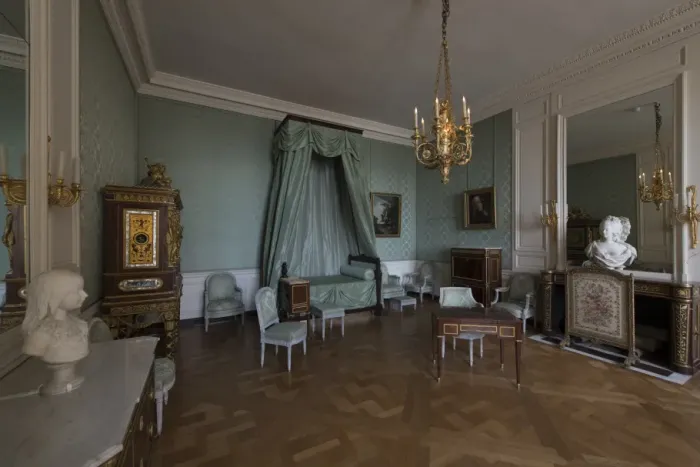
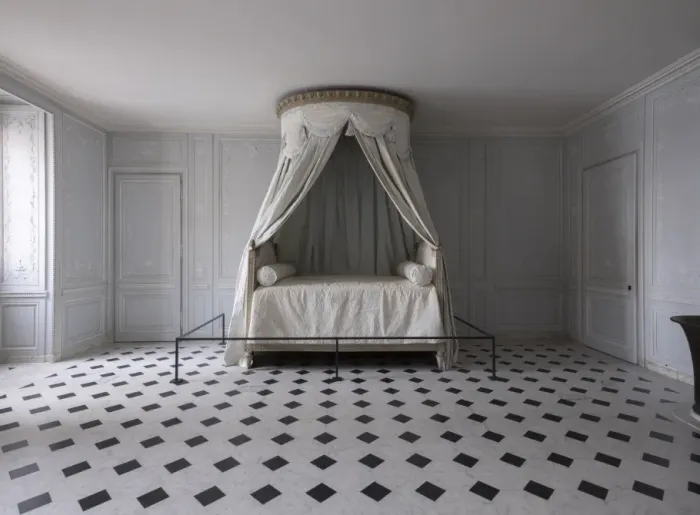
Adjacent to the Captain of the Guards’ apartment, towards the Lower Gallery, lies part of the Queen’s Private Apartment. It was created in 1784 for Marie Antoinette on the site of part of the former apartment of Madame Sophie, who had died in 1782. The apartment included three principal rooms and several smaller service rooms. When the Queen left her State Apartment on the first floor, she would use the King’s Passage and a small staircase leading to the northern bay of the marble vestibule of the Lower Gallery.
This vestibule, dating from 1679, had been partitioned at Madame Sophie’s request in order to enlarge her apartment. Two additional rooms were therefore created near the princess’s bathroom: a turret room and a library. Their walls were decorated with stucco painted with landscapes and ornamental foliage framed by imitation marble. Fifteen years later, this room became the heart of Queen Marie-Antoinette’s private apartment. It was demolished during the nineteenth century and has not been possible to restore.
The Queen’s Private Apartment
© EPV / Thomas Garnier
The Queen’s Private Apartment
© EPV / Thomas Garnier
tickets

Passport
This ticket gives access to the whole estate of Versailles.
 Passport
Experience the best of Versailles!
For a whole day, enjoy access to the entire Versailles estate.
Good to know:
From 4 pm, enjoy a discounted rate.
Enjoy a discounted rate by choosing to enter the Palace from 3 pm onwards.
Holders of a Paris Museum Pass (PMP) must obtain a free Passport ticket.
This ticket includes entry to:
- the Palacewith timed entry;
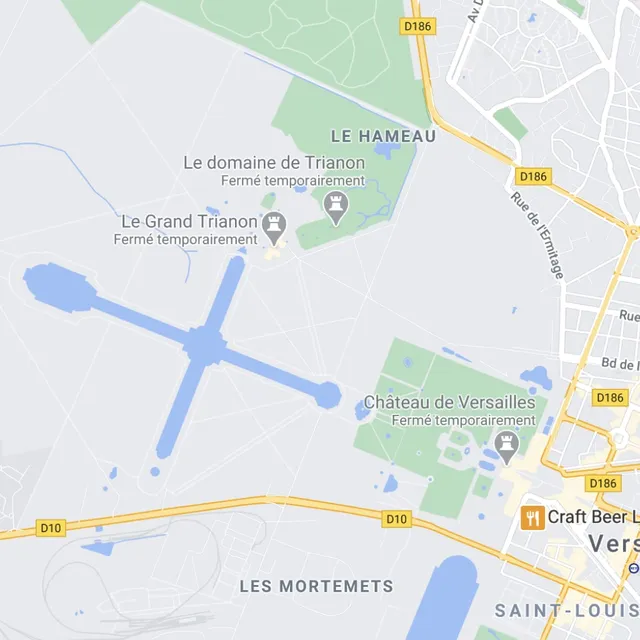
- the estate of Trianon; the Grand Trianon, the Petit Trianon and the Queen’s Hamlet (open from 12 noon)
- the temporary exhibitions; presented in these spaces (including the Sofia Coppola exhibition, accessible from 22 September 2026)
- the Gardens (until 31 October, single admission during the Musical Gardens or Musical Fountains Show, ticket valid for one entry);
Only the visit to the Palace requires booking a time slot. You are free to enjoy the other areas of the estate throughout the day.
Good to know:
To make sure you don’t miss a thing, plan your visit and check out the other areas of the estate that are free to visit, such as the Gallery of Coaches, the Sculpture and Mouldings Gallery (open on weekend afternoons), as well as the Royal Tennis Court and the Park.
Find all our pricing terms and conditions on our website.
Tickets are non-refundable and non-exchangeable.