

In spring 2026, the Palace of Versailles will unveil the reconstruction of Louis XVI’s bed, the culmination of a project that has been in the making for over forty years. Destroyed during the French Revolution, this bed brings to life a central aspect of the king’s daily life and offers a unique insight into the sovereign’s private life within his private apartments.
The restoration of the King's Bed
One in three beds : privacy versus pomp
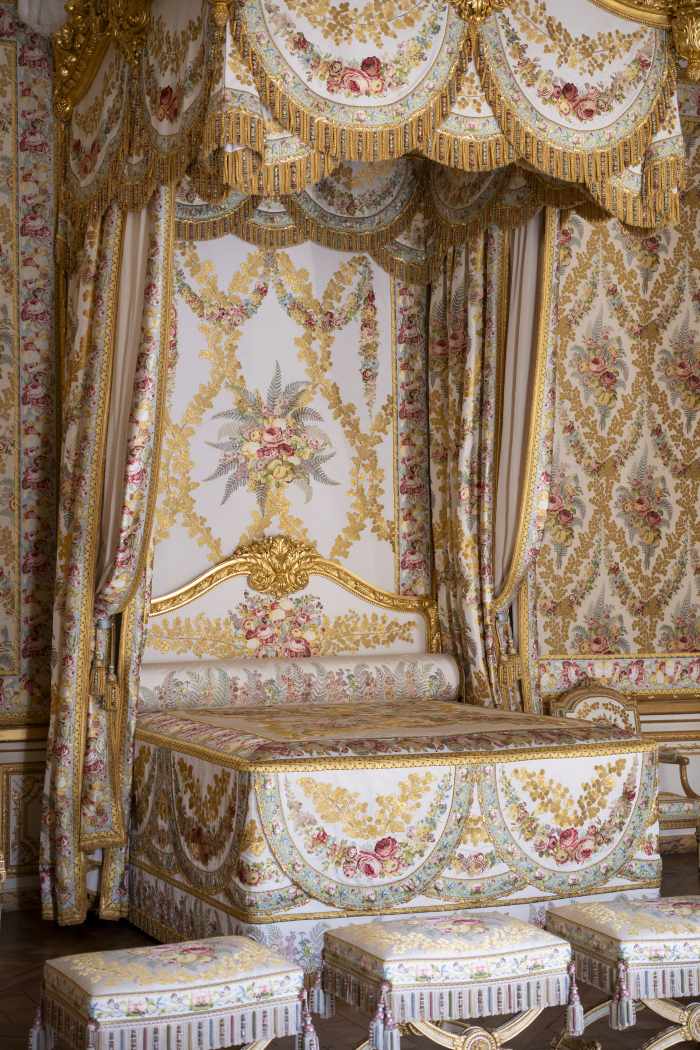
After several years of work in the workshop, the fretwork and the imperial headboard of the bed in Louis XV’s private apartments within the inner apartments of the Palace of Versailles have been restored. This bed was part of the inner apartments, a private space commissioned by Louis XV to lead a more secluded daily life, away from the scrutiny of the court that was imposed in the grand state bedchamber inherited from Louis XIV.
At Versailles, the king had three beds, each serving a specific purpose. The ceremonial bed was used for the rituals of rising and retiring, in a vast room not particularly conducive to rest. The queen’s bed, shared with Marie-Antoinette, was dedicated to married life. This third bed, more discreet, was for intimacy and daily life. Louis XVI slept there most often between 1775 and 1789, alone.
Restoring a royal bedroom
Recreating this bed presents an exceptional challenge. Like many items of royal furniture, this bed disappeared during the Revolution. A number of the objects were sold off at auctions, whilst symbols of monarchical power were destroyed. Louis XVI’s bed was thus lost, along with the textiles and much of the bedroom’s décor.
Consequently, as no visual representation of the piece had been preserved, the teams relied on a single source: an invoice signed by the king’s sculptor, Pierre-Edmé Babel. Based on these descriptions, extensive research and interpretation work was undertaken. The reconstruction of this exceptional piece was carried out by the sculptors Charles Boulnois and François Gilles, alongside their teams, with the aim of recreating the bed’s forms, proportions and motifs. Each element was redesigned in keeping with the decorative style of the 18th century.
Craftsmanship in the service of history
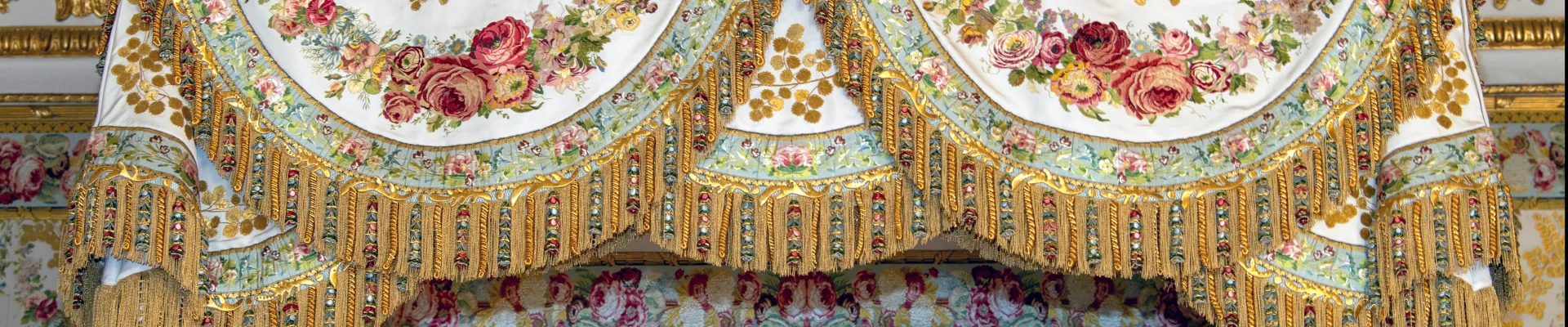
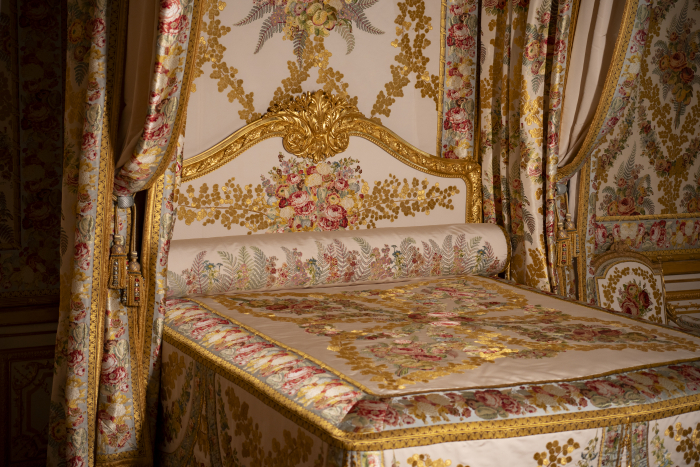
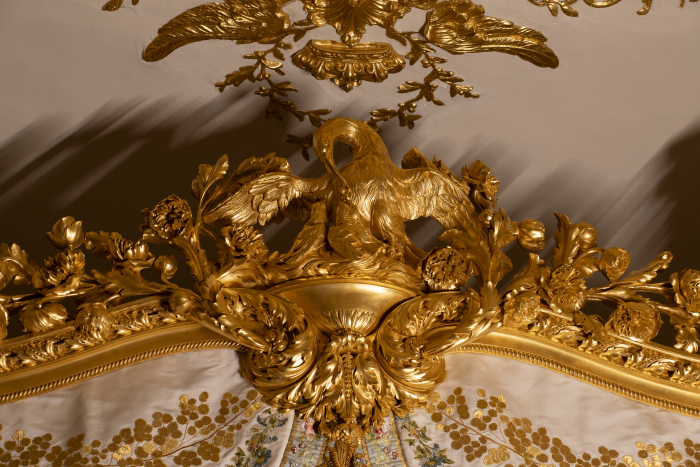
The gilding, applied using gold leaf, is one of the most striking features of the ensemble. A total of 1,625 sheets of gold leaf cover the bed and its carvings. The installation of the imperial finial, the sculpted top of the canopy, marked a decisive stage in the project. The entirely gilded elements were installed with the utmost care in the King’s bedroom.
At the centre of this composition stands a carved pelican, a Christian and royal symbol. It embodies the figure of the sovereign feeding his people, a powerful image of the monarchical role. This particularly expressive sculpture stirred deep emotion among the craftsmen.
The room is open to the public with a Passport ticket and and as part of a guided tour that includes the king’s private apartments. This opening offers a rare opportunity to discover a room that has long remained hidden from view, bringing visitors closer to the sovereign’s private sphere.

Passport
This ticket gives access to the whole estate of Versailles.
35 €
Read more Passport
Experience the best of Versailles!
For a whole day, enjoy access to the entire Versailles estate.
Good to know:
From 4 pm, enjoy a discounted rate.
Enjoy a discounted rate by choosing to enter the Palace from 3 pm onwards.
Holders of a Paris Museum Pass (PMP) must obtain a free Passport ticket.
This ticket includes entry to:
- the Palacewith timed entry;
- the estate of Trianon; the Grand Trianon, the Petit Trianon and the Queen’s Hamlet (open from 12 noon)
- the temporary exhibitions; presented in these spaces (including the Sofia Coppola exhibition, accessible from 22 September 2026)
- the Gardens (until 31 October, single admission during the Musical Gardens or Musical Fountains Show, ticket valid for one entry);
Only the visit to the Palace requires booking a time slot. You are free to enjoy the other areas of the estate throughout the day.
Good to know:
To make sure you don’t miss a thing, plan your visit and check out the other areas of the estate that are free to visit, such as the Gallery of Coaches, the Sculpture and Mouldings Gallery (open on weekend afternoons), as well as the Royal Tennis Court and the Park.
Find all our pricing terms and conditions on our website.
Tickets are non-refundable and non-exchangeable.
Guided tour - The King's Private Apartments
Beyond the walls and ceremonial life of the State Apartment, was the Kings’ Private Apartment.
10 €Réserver
Guided tour - The King's Private Apartments
Read more10 €
Duration : 1½ hours
Guided tour - The King's Private Apartments
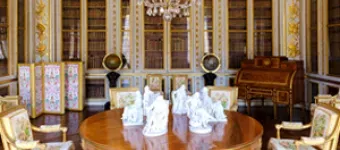
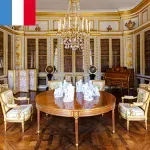
Behind the walls of the Grand Apartments lie the private apartments of Louis XV and Louis XVI. Accompanied by a qualified guide, this tour gives you a look into the intimate atmosphere and the refined decoration of these living areas.
Meeting point at the North Ministers Wing.
NB: this visit includes narrow passages not exceeding 80 cm.
Show
The Musical Fountains Show and the Musical Gardens
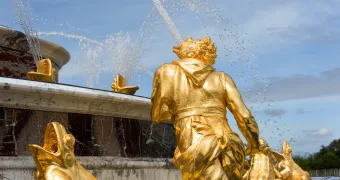
From April 1st to November 1st 2026, enjoy the Musical Gardens and the Musical Fountains Show in the gardens and groves opened for the occasion. Every Saturday evening from 6 June to 19 September, discover the Gardens in the evening with the The Night Fountains Show.
Patronage
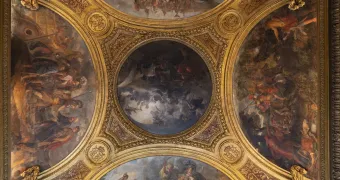
Restoration of the painted ceiling in the Diana Room
The restoration of the ceiling of the Diana room, was completed in June 2026, revealing the restored splendor of its painted vault and stucco. Discover the behind-the-scenes look at the prodigious work of the painting restorers.
Exhibition
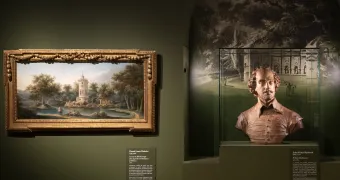
Gardens of the Enlightenment
The exhibition “Gardens of the Enlightenment, 1700–1800,” held from May 5 to September 27 2026 at the Grand Trianon, offers a unique insight into landscape gardens in the 18th century, through nearly 160 works.