

exceptional opening
The Trianon-sous-Bois wing of the Grand Trianon will be open from April 1st to the end of October:
- Every weekend, self-guided and guided tours, from 12:00pm to 6:30pm
- Guided tours only on weekdays
Accessible with a Passport ticket or Estate of Trianon or the "1 year in Versailles" card.
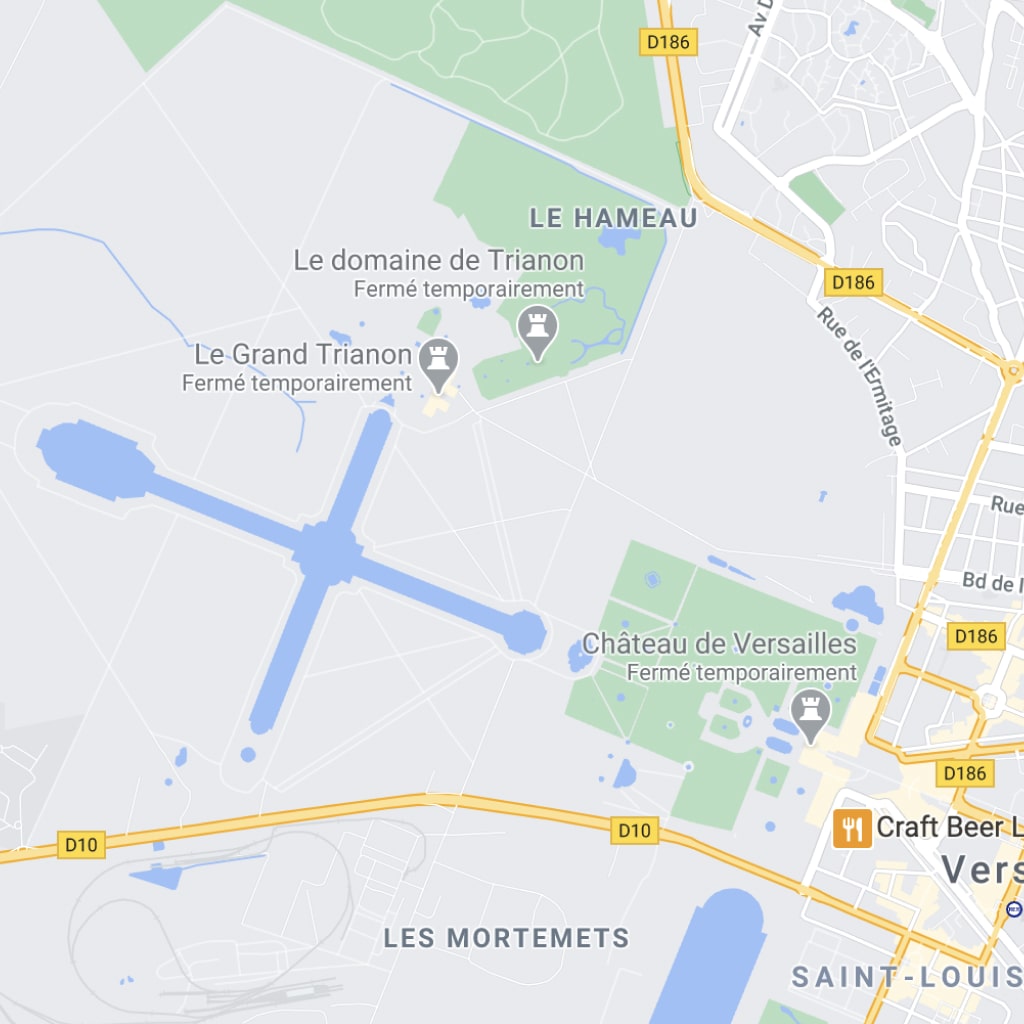
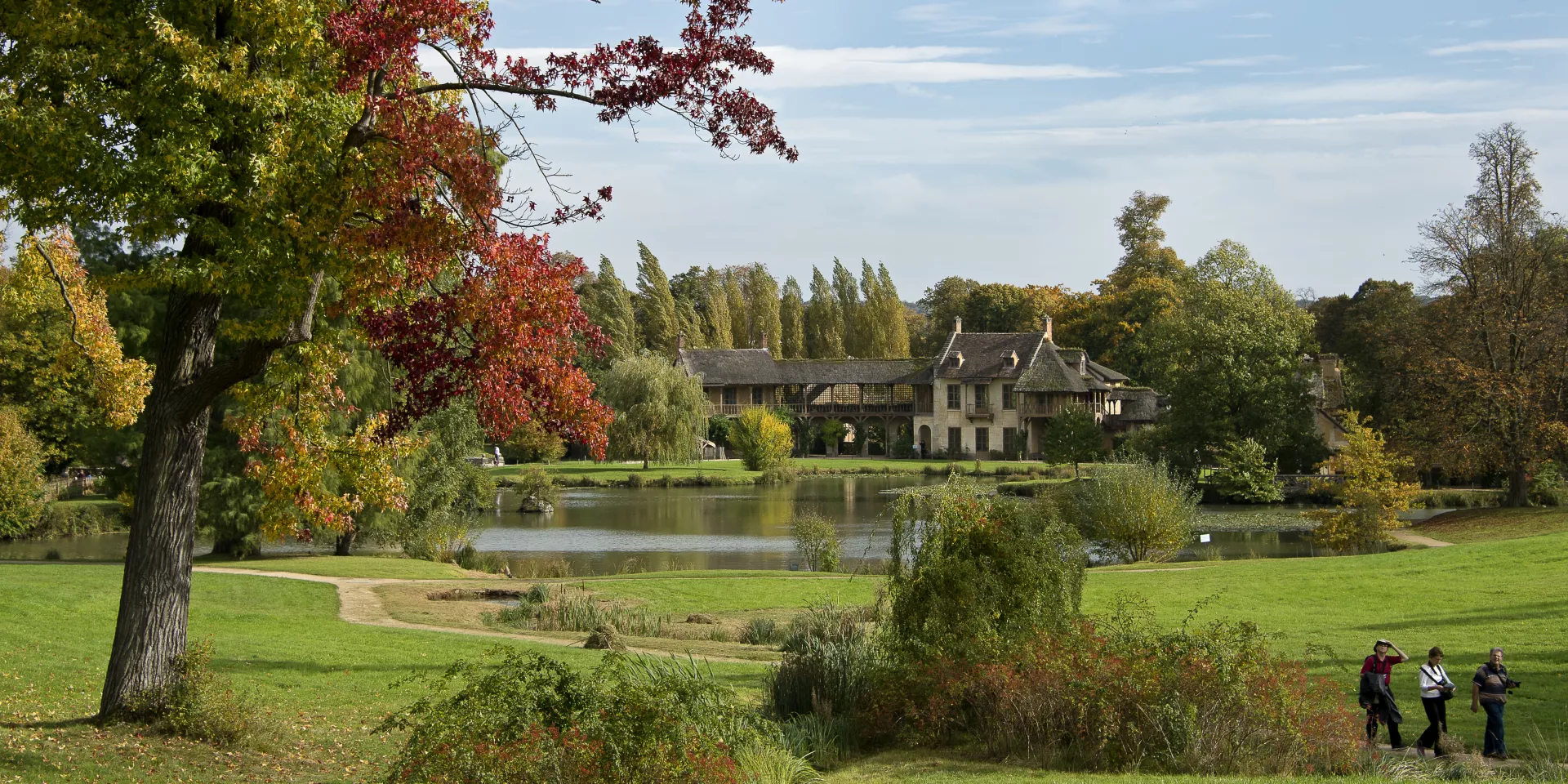
Construction on the estate began under Louis XIV, who had the Grand Trianon Palace built at the far end of the northern branch of the Grand Canal. The estate is perhaps most closely associated with Queen Marie-Antoinette. The wife of Louis XVI regularly sought refuge at the Petit Trianon, where she commissioned marvellous landscaped gardens centred around a hamlet of cottages built in the rustic style then in vogue. Designed for more intimate moments, this royal estate contains architectural gems and magnificent gardens whose diversity and ornamentation give it a unique charm.
Practical Information
The Trianon palaces and Marie Antoinette's Estate can be accessed from the town of Versailles and from the Estate.
There are three ways to get there from the Palace:
- On foot through the gardens (about a 30-minute walk).
- By little train, getting off at the Grand Trianon or Petit Trianon stop.
- By small electric vehicles.
Please note that there is an admission charge for the gardens on days when the fountains are in operation (unless you have a Passport, Musical Gardens, or Musical Fountains Show).
The Grand Trianon is a unique architectural composition featuring a central colonnaded gallery, or ‘Peristyle’, opening onto the central courtyard on one side and the gardens on the other. Construction began in 1687, directed by Jules Hardouin-Mansart under the watchful eye of Louis XIV. The king used this new palace as a private residence where he could spend time with Madame de Maintenon. It was originally known as the ‘Marble Trianon’ on account of the pink marble panels which adorned the palace’s elegant façades. The majority of the apartments have retained their original appearance, including the sumptuous Mirror Room where the king would hold council. The ornate geometric flowerbeds of the French gardens were planted with tens of thousands of flowers, a spectacle which was greatly admired by Louis XIV’s visitors.
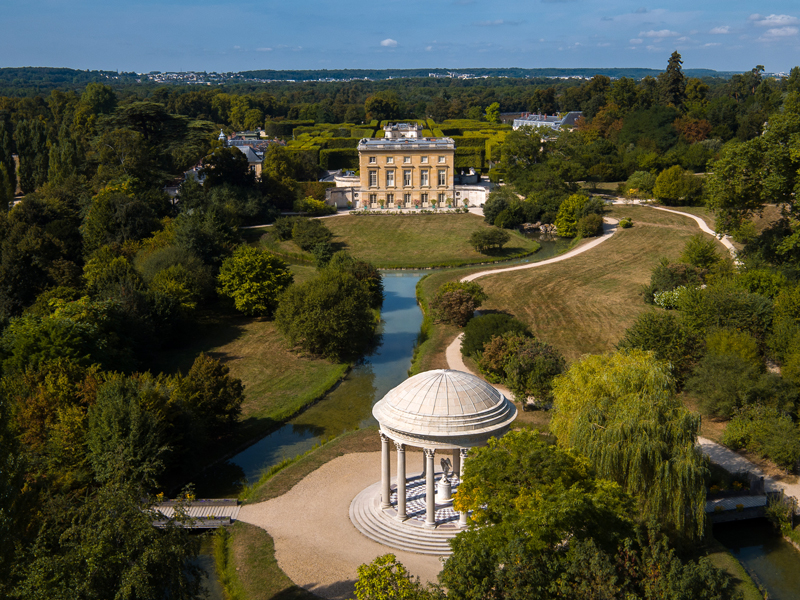
The Petit Trianon, considered to be royal architect Ange-Jacques Gabriel’s masterpiece, is something of a manifesto for the neo-classical movement. Completed in 1768, it provided Louis XV and his new mistress the Comtesse Du Barry with the privacy which was so sorely lacking at the palace.
This new royal residence was in fact an extension of the king’s passion for the botanical sciences: he was keen to have a home in the heart of the gardens to which he devoted so much of his time and which, by the time of his death, were among the most richly-stocked in Europe. With the exception of the French Garden, Louis XV’s beloved gardens were thoroughly overhauled to make way for new, landscaped spaces after his death. Marie-Antoinette, who had such trouble adapting to life in the court, received the Petit Trianon as a gift from Louis XVI in 1774 and developed a great attachment to this estate.
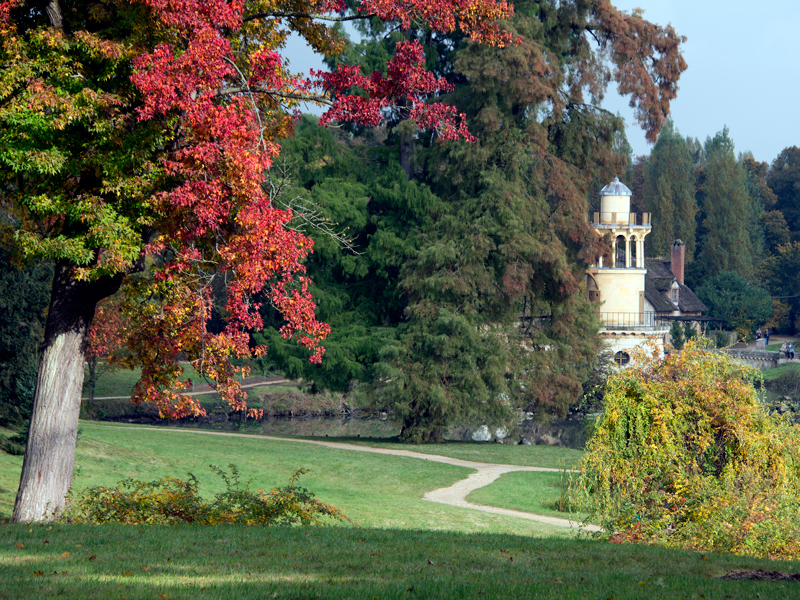
The Queen’s Hamlet, constructed between 1783 and 1786 under the supervision of Richard Mique, is an excellent example of the contemporary fascination with the charms of rural life. Inspired by the traditional rustic architecture of Normandy, this peculiar model village included a windmill and dairy, as well as a dining room, salon, billiard room and boudoir. Although it was reserved primarily for the education of her children, Marie-Antoinette also used the hamlet for promenades and hosting guests.
Meanwhile the Queen’s Theatre, inaugurated in 1780, is the only building to have survived fully intact and unchanged since the eighteenth century. The queen watched private performances here, but also took to the stage herself, another of her great passions.
Estate of Trianon's leaflet
The estate of Trianon's leaflet is free and available for free at the entrance.
events
The Gardens of the Enlightenment
From May 5 to September 27, 2026, at the Grand Trianon, come and discover the exhibition “Gardens of the Enlightenment, 1750–1800” which offers a unique insight into landscape gardens in the 18th century, through nearly 160 works, including paintings, drawings, furniture, architectural plans, and costumes
The Perfumer’s Garden
Located in the Châteauneuf Orangery, this garden of hundreds of floral species tells the story of perfume and its uses at the Court of Versailles. Its paths and richly flowered parterres are freely accessible from the Bassin du Trèfle via the chemin creux. Open to all visitors for self-guided visits every weekend for the duration of the “Gardens of the Enlightenment, 1750-1800” exhibition, from May 9 to September 27, from 12 pm to 6:30 pm (last admission at 5:45 pm), as well as on guided tours.
The Perfumer’s Garden project is the result of an exceptional collaborative effort between the gardeners of Trianon and Maison Francis Kurkdjian.
The Beautiful Waters of Trianon
Come and discover the Beautiful Waters of Trianon and enjoy the gardens of the Grand Trianon and the Petit Trianon and their water fountains, including the Buffet d'Eau, restored in 2023.
Opening hours: Tuesdays, Thursdays, Saturdays and Sundays, noon to 4 p.m.
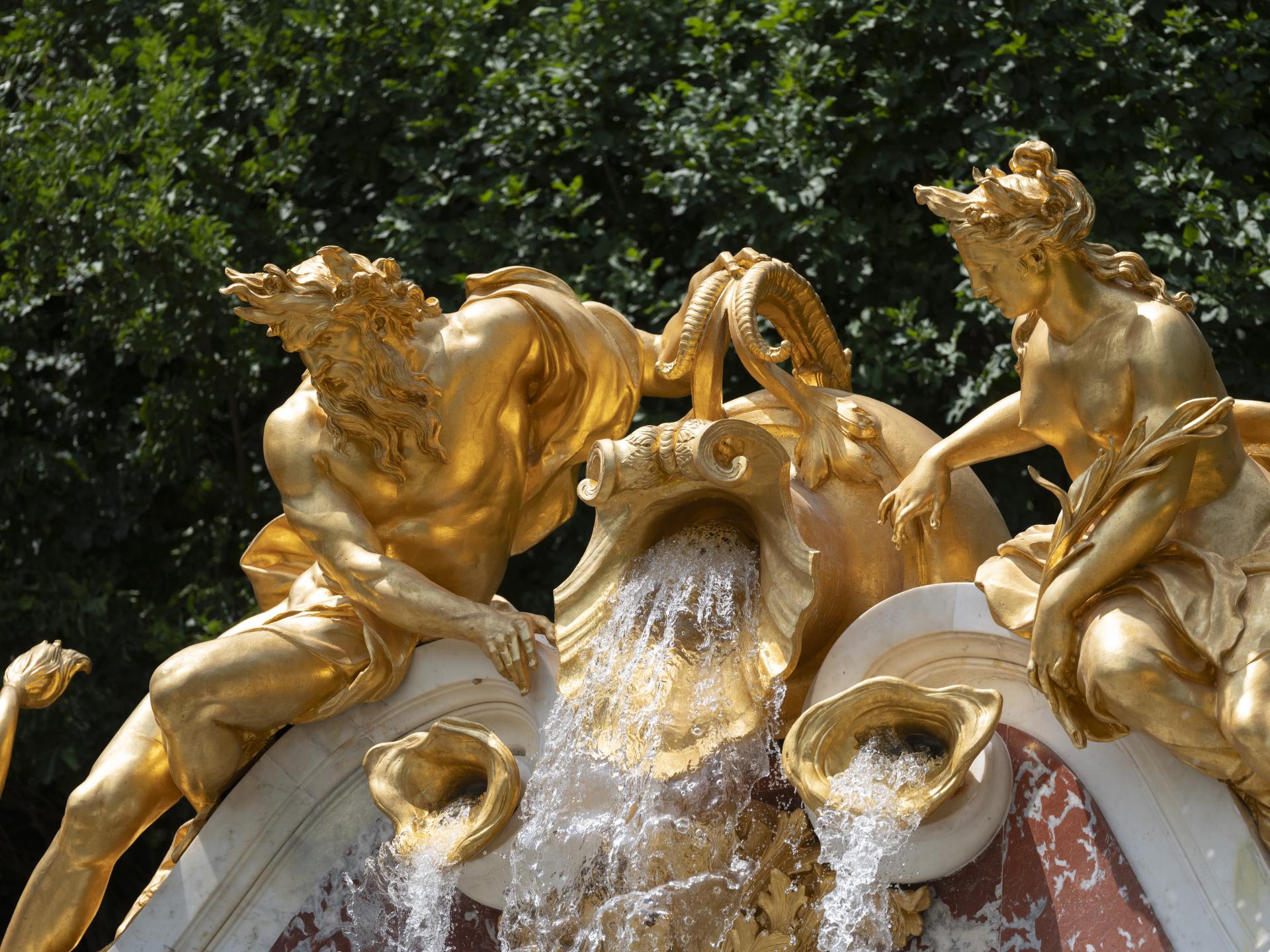
The Buffet d'Eau
© EPV / Thomas Garnier
Buy your ticket
The interior of Queen's House is accessible only on a guided tour


Estate of Trianon ticket
This ticket gives you access to the estate of Trianon.
 Estate of Trianon ticket
Spend an afternoon exploring the private grounds of the royal family.
Holders of a Paris Museum Pass (PMP) must obtain a free ticket for the estate of Trianon.
This ticket includes entry to:
- the estate of Trianon; including the Grand Trianon, the Petit Trianon and their gardens, as well as the Queen's Hamlet (starting at noon).
- the tempory exibitions presented there;
Good to know:
To make sure you don’t miss a thing, plan your visit and check out the other areas of the estate that are free to visit, such as the Gallery of Coaches, the Sculpture and Mouldings Gallery (open on weekend afternoons), as well as the Royal Tennis Court and the Park.
Only the Passport grants access to the entire Versailles estate (the Palace, Estate of Trianon and the Gardens) and guarantees entry to the Palace.
Find all our pricing terms and conditions on our website.
Tickets are non-refundable and non-exchangeable.
guided tours

Guided tour - Marie-Antoinette's Petit Trianon
In 1774, the Queen received the gift of the Petit Trianon from Louis XVI.
Guided tour - Marie-Antoinette's Petit Trianon
Read more
In 1774, the Queen received the gift of the Petit Trianon from Louis XVI. The estate became her kingdom. Freed from the constraints of etiquette, she created a world in keeping with her own personality and the fashions of the day.
Meeting point at the Petit Trianon