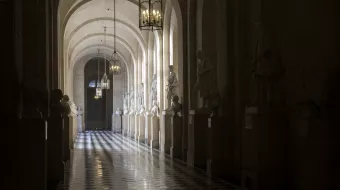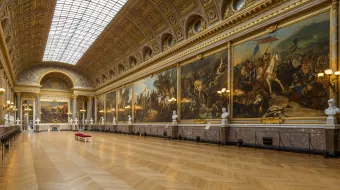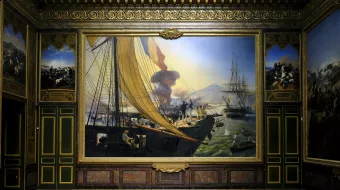


These rooms, which were created during the reign of Louis-Philippe, between 1837 and 1847, on the site of the former courtiers’ apartments, display some of the collection of historic paintings at Versailles, depicting the French Revolution (1789-1799) and the Consulate (1799-1804). The Chimay Attic, located above the Queen’s apartments, is thought to be named after Marie-Antoinette’s last lady-in-waiting, who is said to have lived in these spaces just prior to the Revolution.
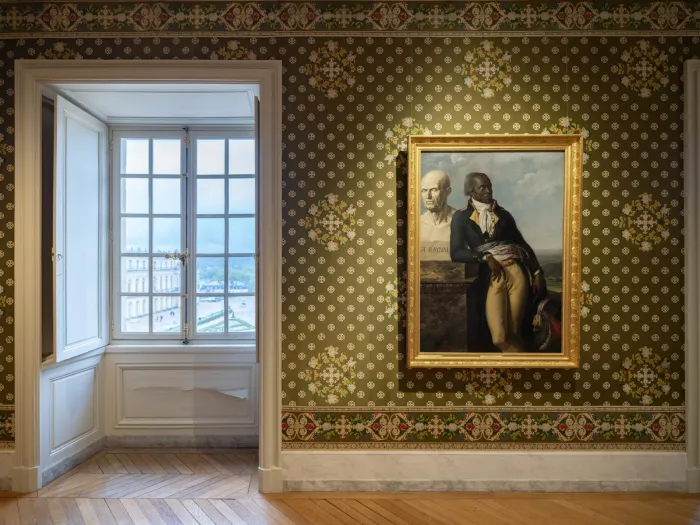
Portrait of Jean-Baptiste Belley, elected deputy for Saint-Domingue© EPV / Thomas Garnier
A political project
The Napoleonic collections are now displayed in several spaces in the Palace: in the Coronation Room, which showcases Napoleon’s accession to the Empire; in the “Revolution, Consulate and Empire” Rooms on the ground floor of the South Wing, which present some of the most significant moments of his accession and reign in the political, military and diplomatic spheres; and in the Gallery of Great Battles. The Chimay and South Attics house other works depicting the Napoleonic story, supplemented by a number of portraits of the Emperor’s entourage and the society of his day.
Access
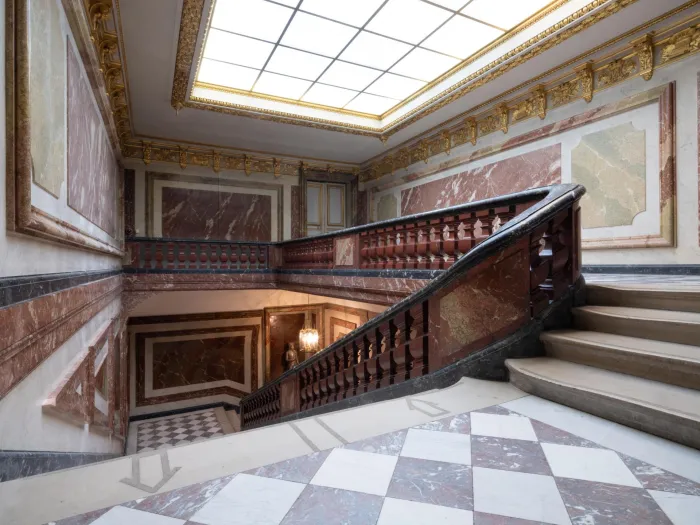
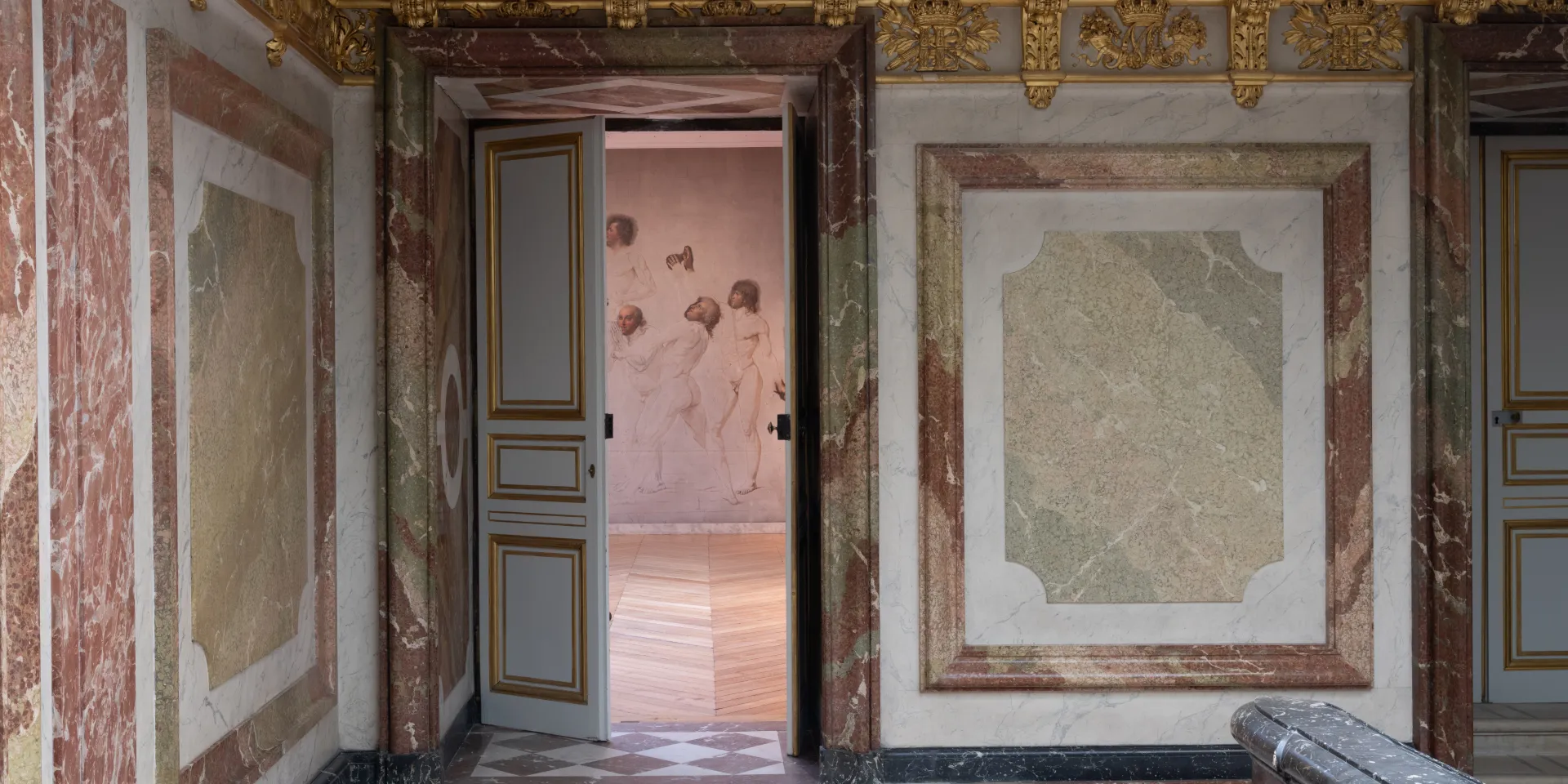
Stucco staircase
© EPV / Thomas Garnier
On the advice of his architect, Frédéric Nepveu, Louis-Philippe had a staircase built leading from the landing of the Queen’s staircase. This new access, which blends in seamlessly, was adorned with lavish stucco decoration imitating the marbles used in the Grand Siècle.
Accessibility
The Attics are not accessible to wheelchair users or to visitors who are unable to climb stairs between floors.
The collections
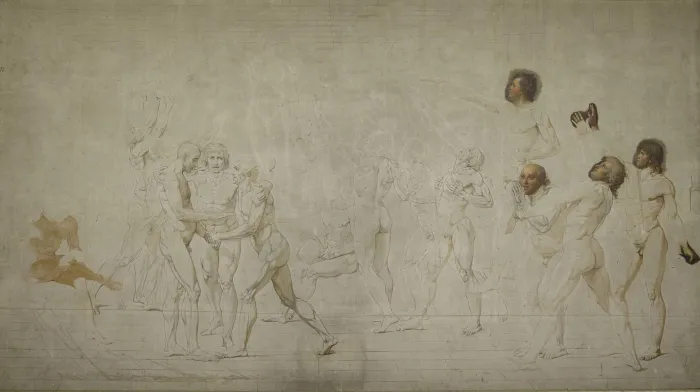
Jacques-Louis DAVID, Jeu de Paume Oath, 20 June 1789, oil on canvas, bistre wash and black pencil, 1791-1792
© EPV / Franck Raux
The tour combining historic scenes and painted and sculpted portraits begins with the Revolution, with Jacques-Louis David and the unfinished and fragmentary painting of the Jeu de Paume Oath on 20 June 1789. It then traces the meteoric rise of Napoleon Bonaparte up to the Consulate (1799-1804), and includes the Italian and Egyptian Campaigns (1796-1801).
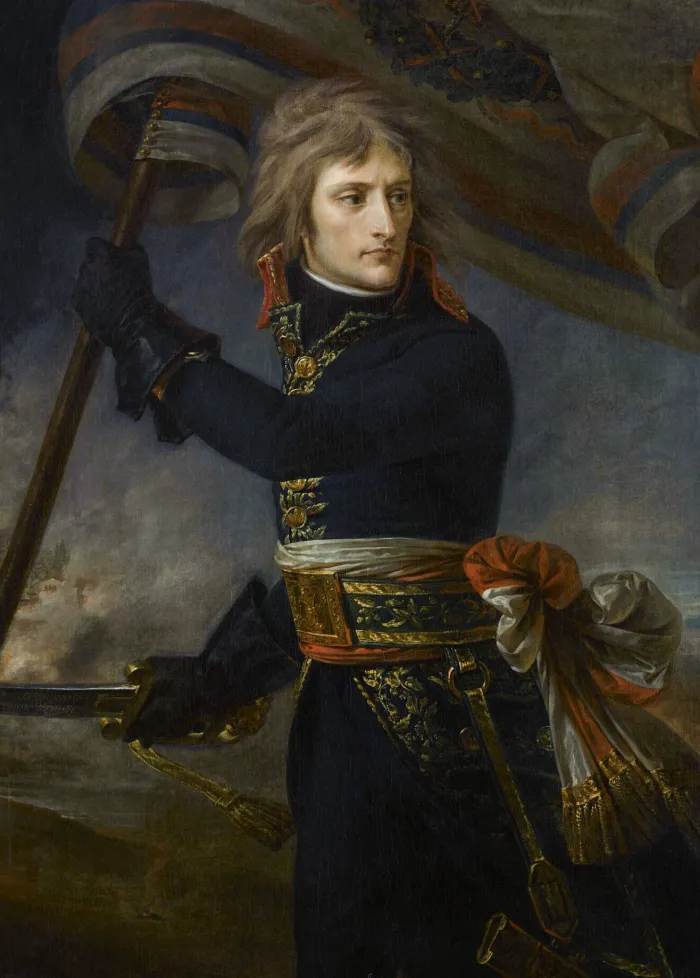
Antoine-Jean GROS, Bonaparte on the Bridge at Arcole, 17 November 1796, oil on canvas, 1796
© EPV / Franck Raux
The “stars” of the Chimay Attic remain Le Jeu de Paume Oath (1790-1791) and The Death of Marat (1793) by David, as well as Bonaparte on the Bridge at Arcole by Gros (1796) – the first official portrait of General Bonaparte – and the portrait of Deputy Jean-Baptiste Belley by Girodet (1797). Also of note are the busts of La Fayette by Houdon (1790) and of Desaix by Chinard (1800-1808).
Discover part of the historic paintings collection at Versailles!