

These spaces are not open for unaccompanied visits, but can be visited during a guided tour most days at 10am,
Louis XV’s Bedchamber
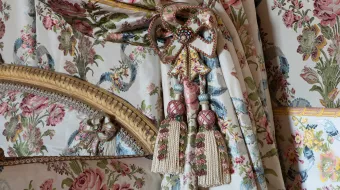
Louis XV built a new bedchamber in 1738 not far from his Ceremonial bedchamber, which was just as impractical as it was majestic. The new bedchamber was smaller and facing south and therefore easier to heat, and he died there on 10 May 1774 at 1 pm. The woodwork in the room, including the large palm trees and royal arms decorating the alcove, is by the sculptor Jacques Verberckt. The royal arms are covered by a brocade Gros de Tours fabric, a reproduction of the one placed here by Louis XVI in 1785.
To the left of the alcove is the entrance to the Clothes Cabinet, whose wooden panels are among the most beautiful in the Palace and were commissioned to the Rousseau brothers by Louis XVI on the eve of the French Revolution.
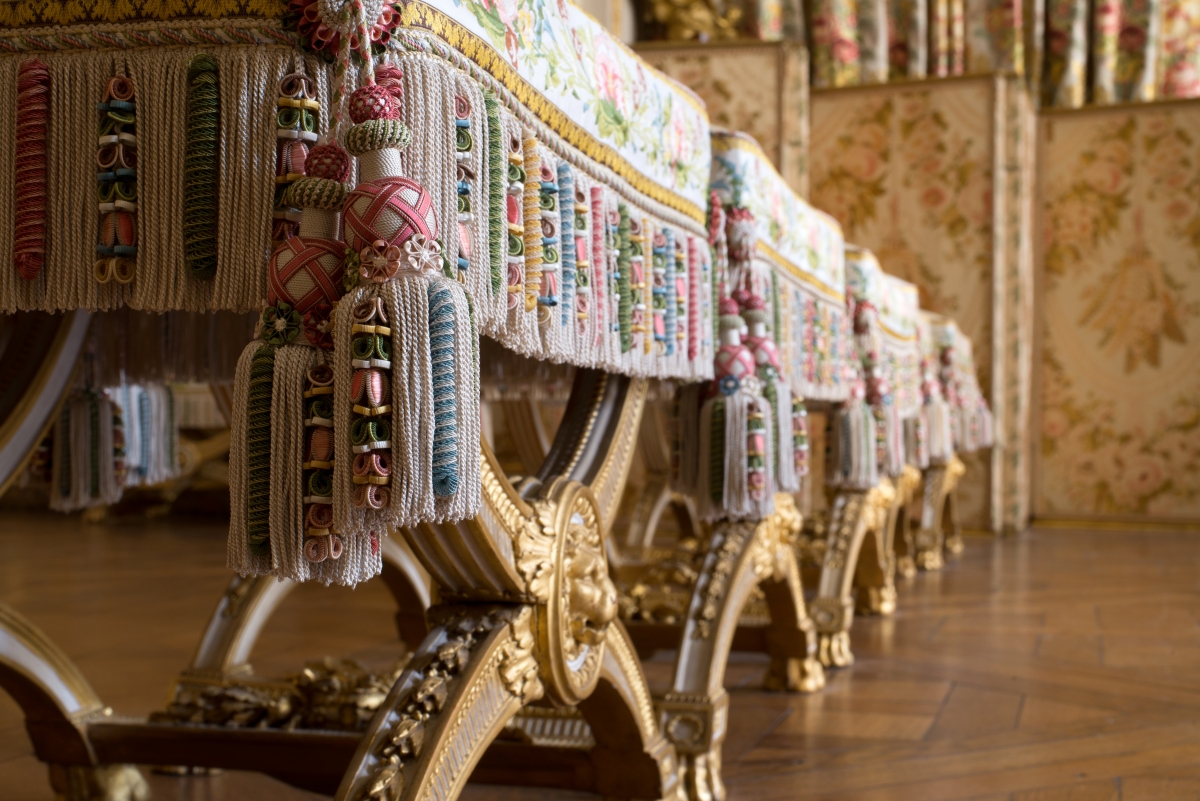
Louis XVI’s Clothes Cabinet
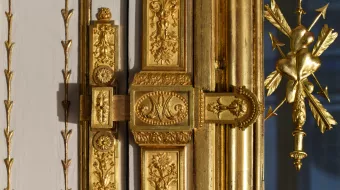
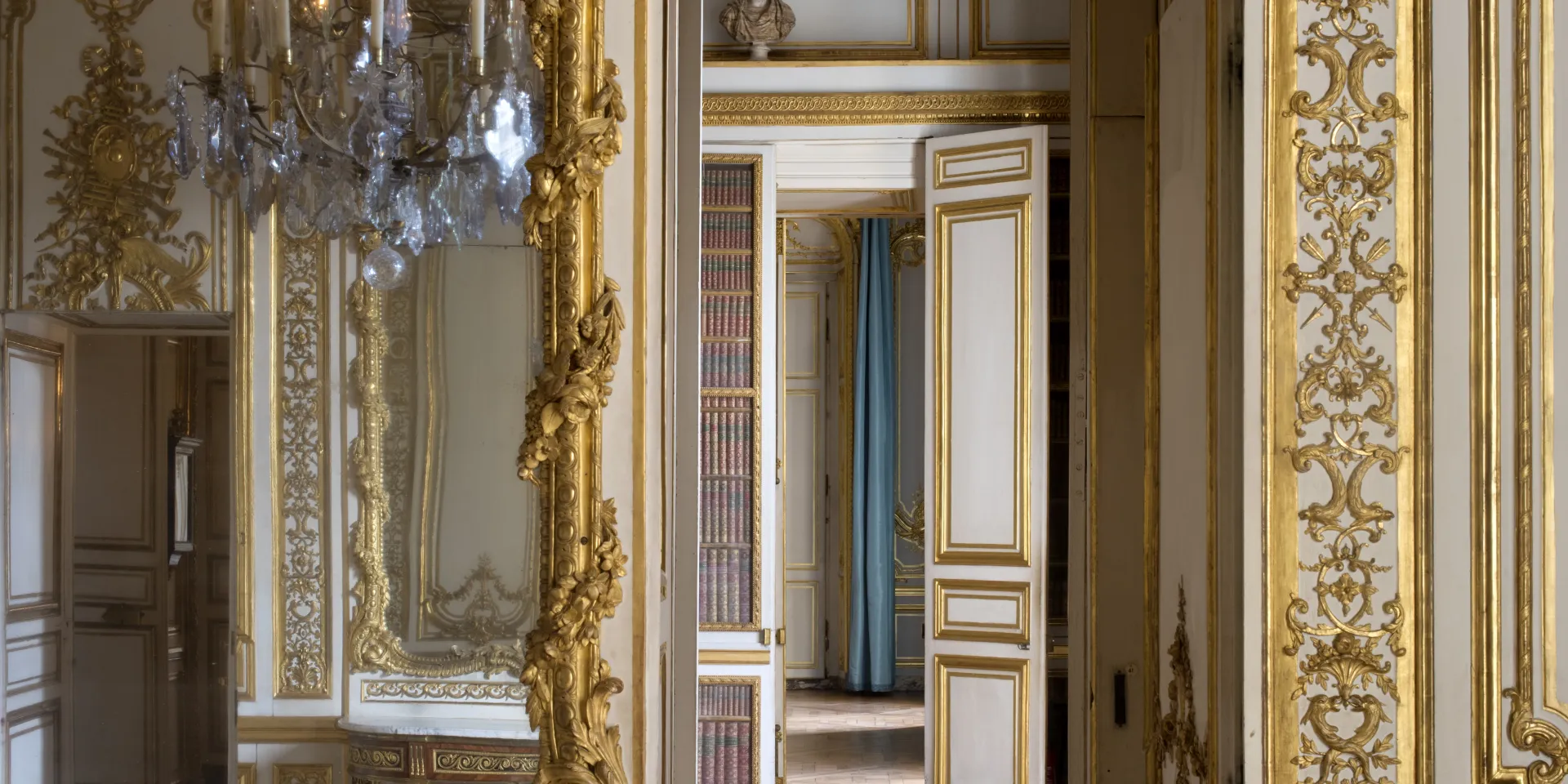
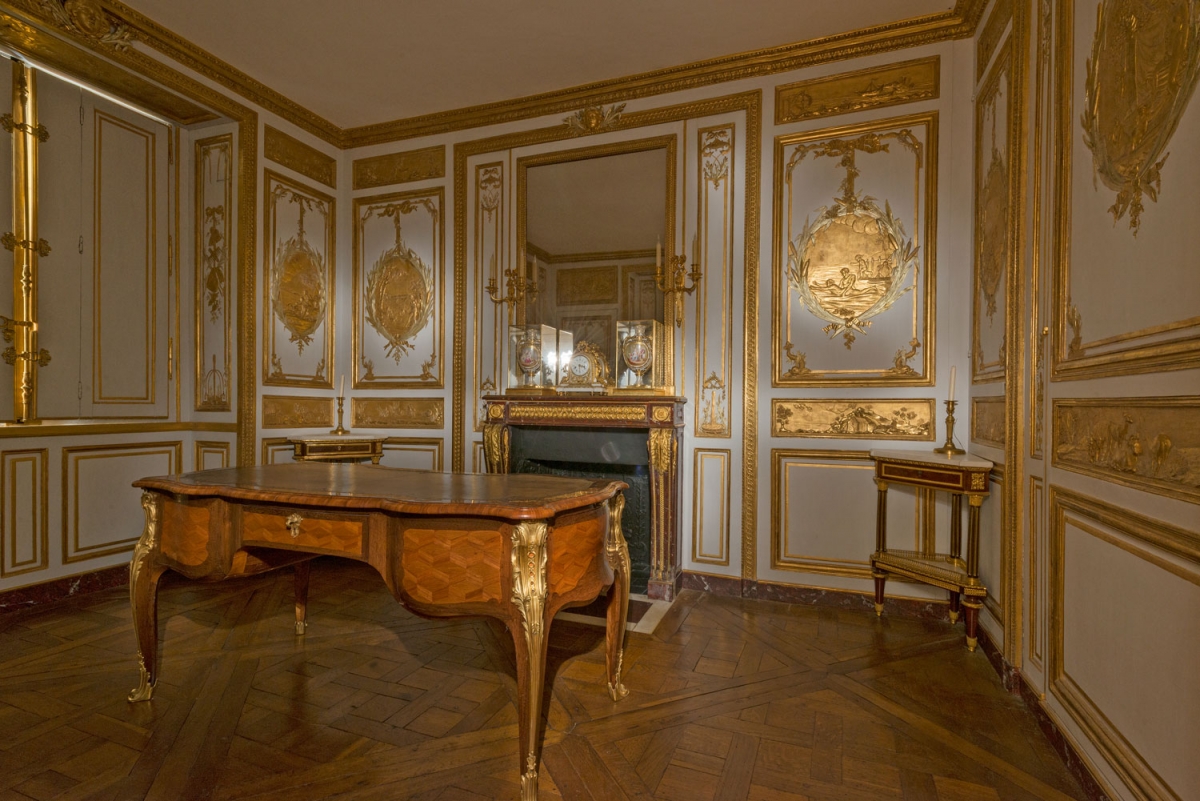
The Clothes Cabinet was made on the eve of the French Revolution and is the last masterpiece created in Versailles. It was one of the few large-scale modifications to the Private Apartments by Louis XVI and is exceptionally fine, with its carved wooden panelling and cornice. The task of creating this decor was entrusted to the skilled hands of the sculptors and brothers Jean Siméon and Jean Hugues Rousseau, whose final work for the Palace was also one of their greatest. This gilded sculptural decoration contains references to all the main fields of government including trade, farming, the navy, war, sciences and the arts. Nothing is without importance in the iconographic design of this room, which more closely resembles an Italian Renaissance “studiolo” than a room of such practical use as a clothes cabinet. It was, in fact, a place for working, a sort of very private cabinet. Louis XVI’s serious and diligent personality is brought to light in the decor here, which is far removed from the superficial, even conventional, themes in the decoration made for his predecessor. The colour theme consists in harmonious white and gold tones, as was common in the 18th century. The elements of moulding and the carved sections have all been gilded using water gilding, and stand out against the white glue-size paint.
The room was restored in 2009 thanks to support by Lady Michelham of Hellingly through the Société des Amis de Versailles
The Clock Room
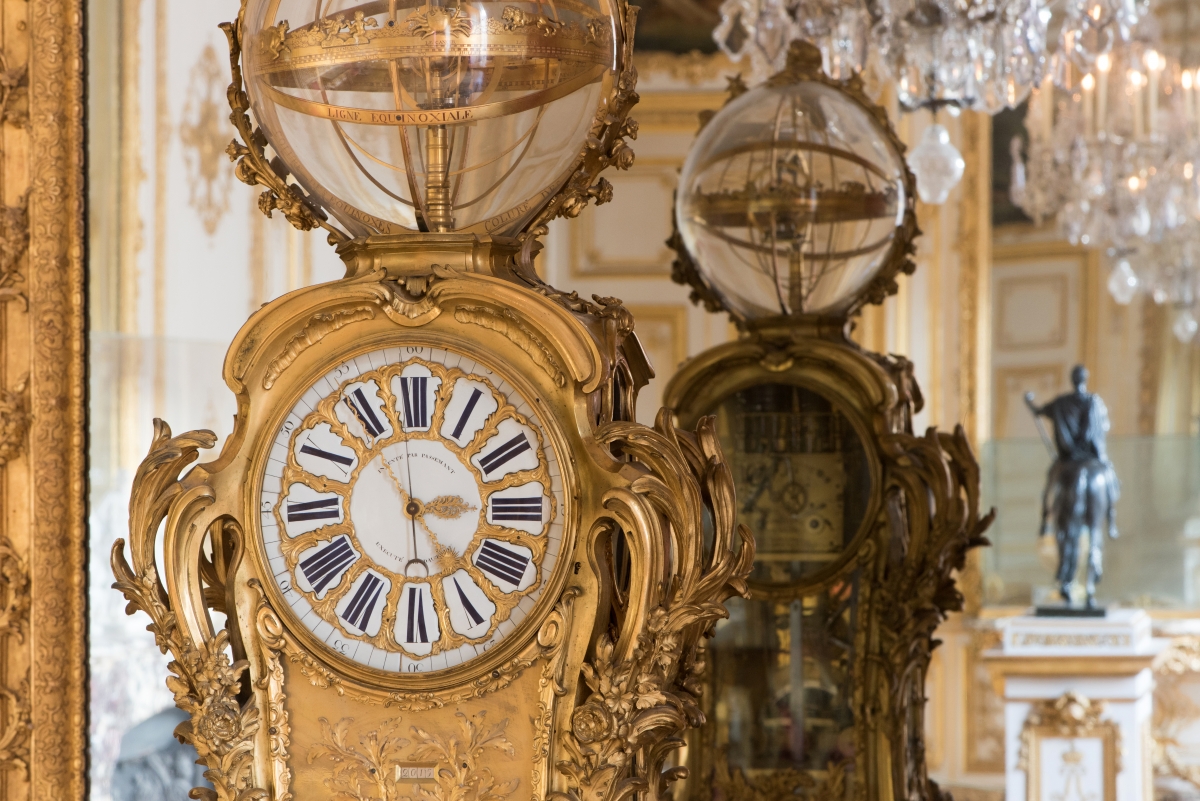
Louis XV was very interested in science and especially astronomy. On the floor of this room there is a copper strip marking the Versailles meridian. The extraordinary clock, which gave the room its name, was first presented at the Academy of Sciences and then to the king in Château de Choisy, before being brought here in 1754. The clock displays the time, day of the week, month, year and lunar quarter, and in the crystal sphere the planets can be seen rotating around the sun. This scientific and artistic monument was designed by Claude-Siméon Passemant, Engineer to the King, and built by the clockmaker Louis Dauthiau. It was placed in a gilded bronze case made by Jacques and Philippe Caffiéri, father and son. It was used to set the official time for the whole kingdom for the first time.
In the centre of the room King Louis-Philippe placed a small-scale version of the equestrian statue of Louis XV, also known as Louis the Beloved, which Bouchardon had made for Place Louis XV, today Place de la Concorde, in Paris. The statue was destroyed during the Revolution.
ACQUISITION OF AN IMPORTANT DRAWING BY CARMONTELLE
This drawing was acquired by the museum on October 2022 and is by Louis Carrogis, known as Carmontelle. It depicts Jean-Benjamin de La Borde, First Valet de Chambre to Louis XV, in the King’s Private Apartment. The work dates from 1762 and is one of the few known portraits of this confidant of the king. Also depicted in the drawing is the Passemant clock – a masterpiece of science and gilded bronze that can still be seen at the Palace today.
The acquisition is a timely one for the Palace of Versailles, as it is currently hosting a major exhibition – entitled Louis XV, Passions of a King – to mark the tricentenary of his coronation.
The Dogs’ Room
As the name and decor on the cornice of this room suggest, Louis XV used this room for his favourite dogs to sleep in. The wooden panels are from Louis XIV’s former Billiard Room, turned into a bedroom by Louis XV; the paintings of flowers above the doors are by Jean-Baptiste Monnoyer and Jean-Baptiste Blain de Fontenay. This room was used by the Valets of the private apartments, who were known as the “blue boys” because of the colour of their livery, and served as a first antechamber to the private apartments.
The Post-Hunt Dining Room
This room was built to replace a small bath chamber in 1750. Once or twice a week Louis XV invited the Seigneurs and Ladies who had gone hunting with him to dinner, which was a great honour at the time. The meals were prepared in the King’s private kitchens on the third floor, and the Buffets room next door to the post-hunt dining room was used to facilitate table service. After dinner the King and his guests went to the Clock Room where they ended the evening playing games.
The King’s Private Chamber
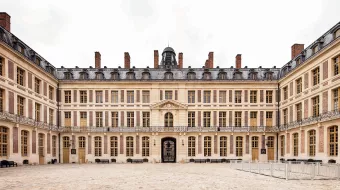
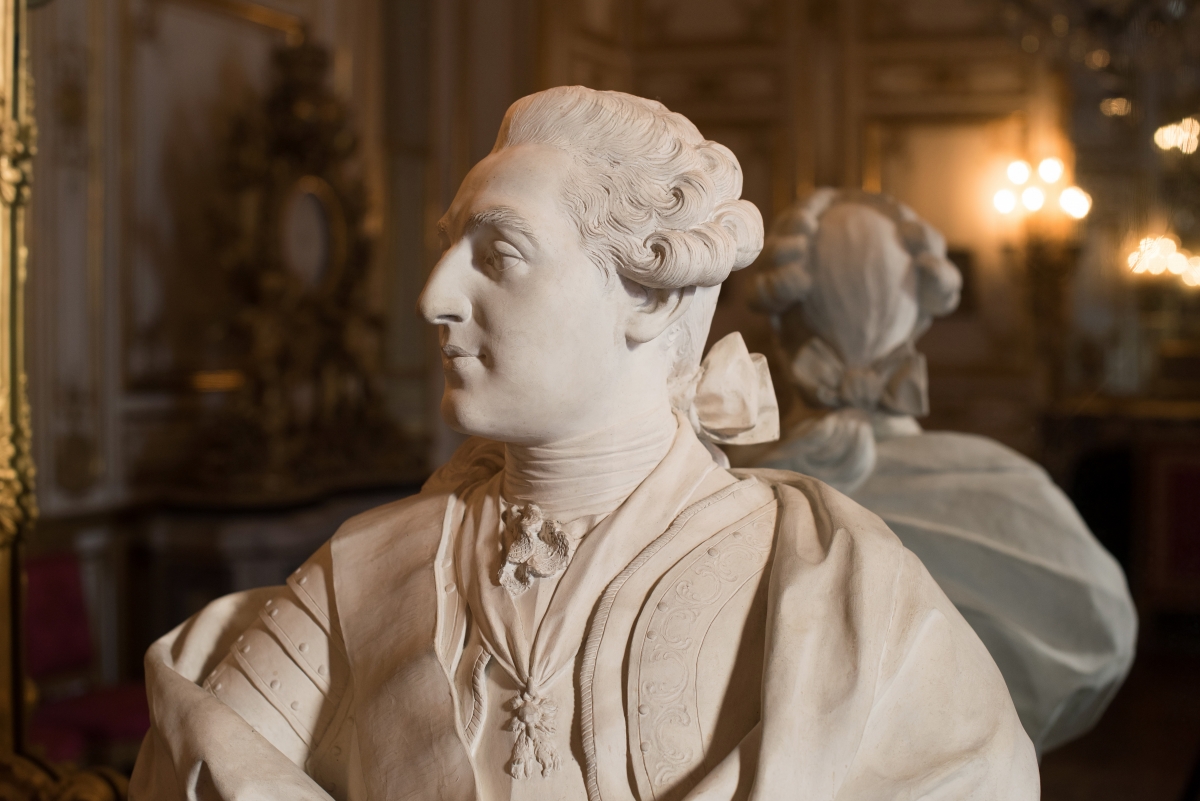
This “corner room”, as it was often called, overlooked both the Marble Courtyard and the Royal Courtyard. Louis XV often enjoyed spending time here and it was from this chamber’s balcony that, with tears in his eyes, he watched the departure of the funeral procession for Madame de Pompadour one evening in the winter of 1764. The cabinet underwent several modifications during his reign, but in spite of this the wooden decor remains one of the finest pieces of work by Jacques Verbeckt, who sculpted the panels in 1753. The original furniture has been restored to the room, notably the cylinder desk commissioned to Oeben in 1760 and completed nine years later by Riesener. It was the first desk of its type, designed to enable the king to leave his papers on the desk but away from prying eyes. In addition to its remarkable marquetry and bronze sculptures, it is also a mechanical marvel: with a single quarter-turn of the key the king was able to lock or unlock both the cylinder lid and all the drawers.
The Dispatch Room
This room occupies the place where the Oval Room, created by Louis XIV in 1692, was once situated. The decoration is composed of Corinthian pilasters and four niches containing sculpted bronze groups, including the famous andirons by Algardi (Louvre). To the left this room led to the Small Gallery, and to the right to the Seashell Room. In the latter, which got its name from the decoration on its cornice, Louis XIV kept his most valuable manuscripts and books, as well as twenty or so paintings including The Pastoral Concert by Titian (Louvre).
In 1754, the Seashell room was removed to make room for the King’s Staircase, and the Oval Room was replaced by a private chamber and a water closet. The private chamber originally contained angular walls which were removed by Louis XVI, who nevertheless kept the carved wooden panels and the paintings by Galloche and Domenchin de Chavanne. Louis XV used to retire here to examine the reports from the secret agents he employed abroad, and to write instructions for them. This room was the headquarters of the “King’s secret”, the name given to Louis XV’s personal acts of diplomacy which he carried out alongside his official foreign policy and which led, among other things, to the “Diplomatic Revolution” of 1756.
The small cabinet to the left of the window was made by Riesener to hold Louis XVI’s watches.
The Golden Service Room
This room was the private chamber of Madame Adélaïde, which she occupied on the first floor of the Palace between 1752 and 1769. It was built in place of the Small Gallery and the Ambassadors’ Staircase and still has several elements of decoration from the Small Gallery, including the cornice, pilasters and window chambranles. New woodwork was added between 1753 and 1767. The panels in the alcove are particularly noteworthy, dating no doubt from the work in 1753, and were raised up to their current position in 1767. Verberckt carved the trophies of musical instruments in a nod to the princess’s tastes, as well as fishing equipment and gardening tools.
For a time, Madame Adélaïde benefitted from the instruction of two of the greatest playwrights of the 18th century: Goldoni, who taught her Italian, and Beaumarchais, who taught her to play the harp. According to tradition the lessons took place in this room.
Later, Louis XV used the room for drinking coffee and displaying his golden tableware. Louis XVI placed here the exceptional ebony and mahogany cabinet, which was covered with porcelain plaques decorated with bird feathers and butterfly wings. Over the fireplace there is a very fine bust of Louis XV as a child by Coysevox. The two plaques in Sèvres porcelaine depicting Washing the Sultan and the Sultan giving orders to the odalisques in the style of Amédée Van Loo were commissioned by Louis XVI for his private chambers.
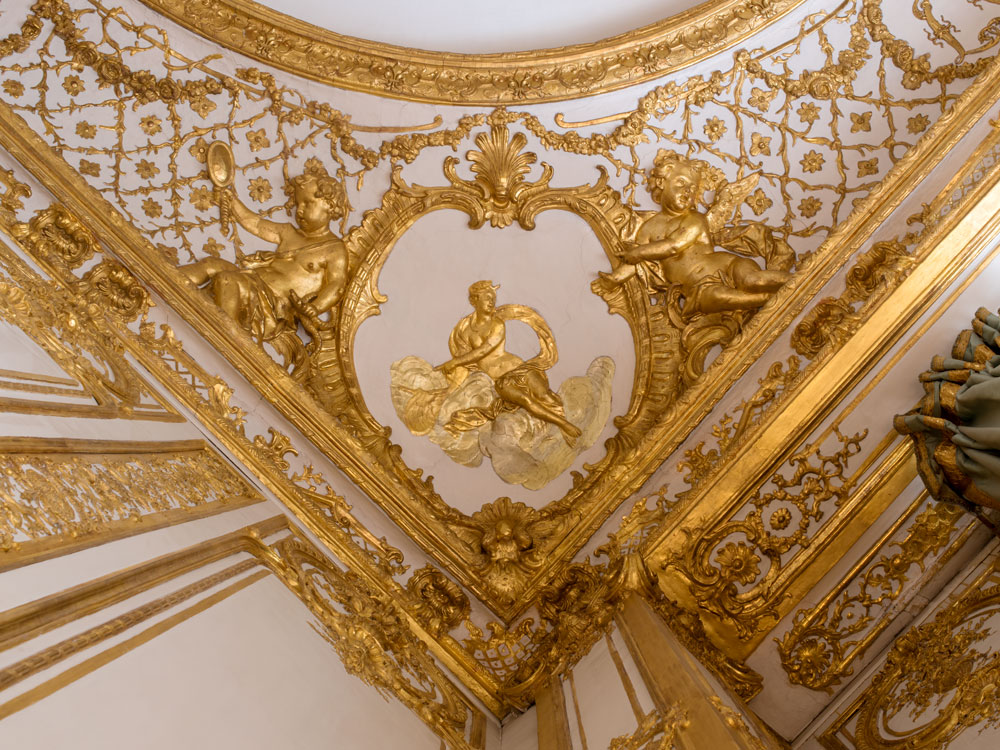
The Royal Ledger Room
This royal bathroom was one of the last works commissioned by Louis XV. The style of the wooden panels testifies to the change in tastes, reproducing prints of water activities in medallions surrounded by reeds and narcissuses, with effects of mat, polished (shiny) and green gold. It was not Verbeckt but his rival Antoine Rousseau, assisted by his sons, who created them in 1771. The bath was removed when Louis XVI made the room his “Royal Ledger Room” where he kept the books for this private accounts.
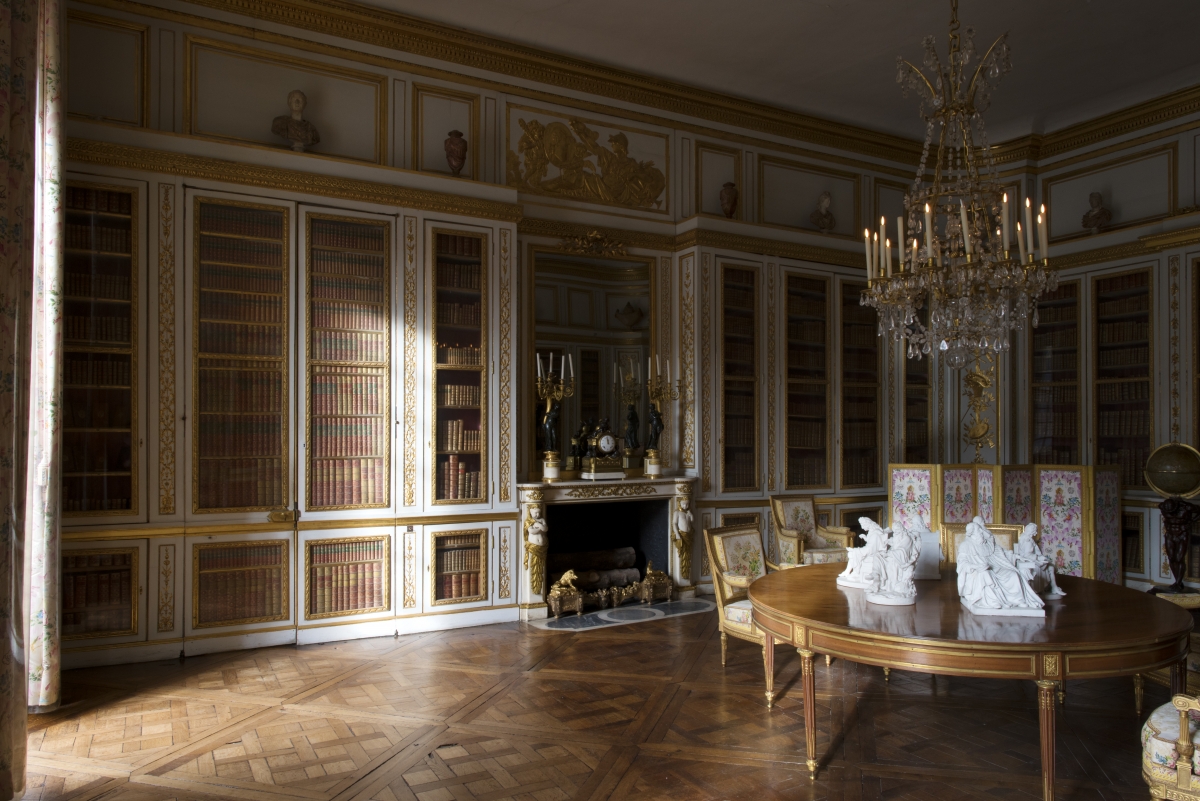
Louis XVI’s Library
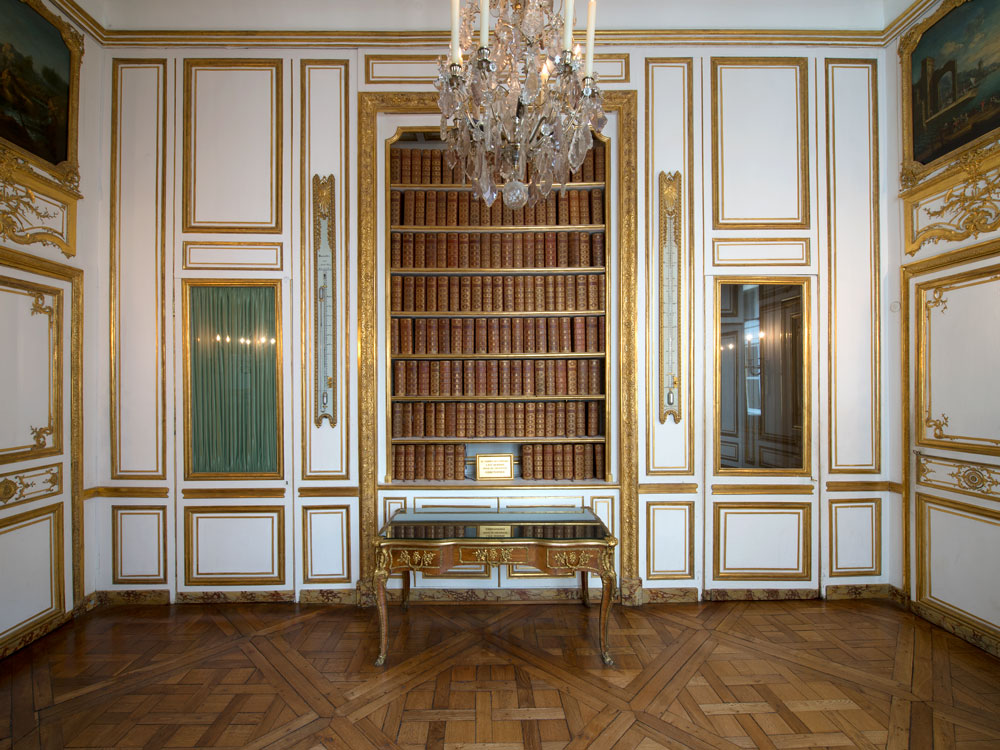
This library was designed by the architect Gabriel not long before the death of Louis XV in 1774. It was the first to be commission by the young Louis XVI and the architect’s last work at Versailles. Although he already had several libraries on the upper floors, the king hastened the work on this large room which had the added benefit of being on the same level as his apartment.
In 1778 Louis XVI placed here the remarkable round mahogany table from Saint Lucia, attributed to the cabinetmaker Quervelle. Four years later he added the lavish commode by Riesener, one of the rare pieces of royal furniture still occupying its original place today.
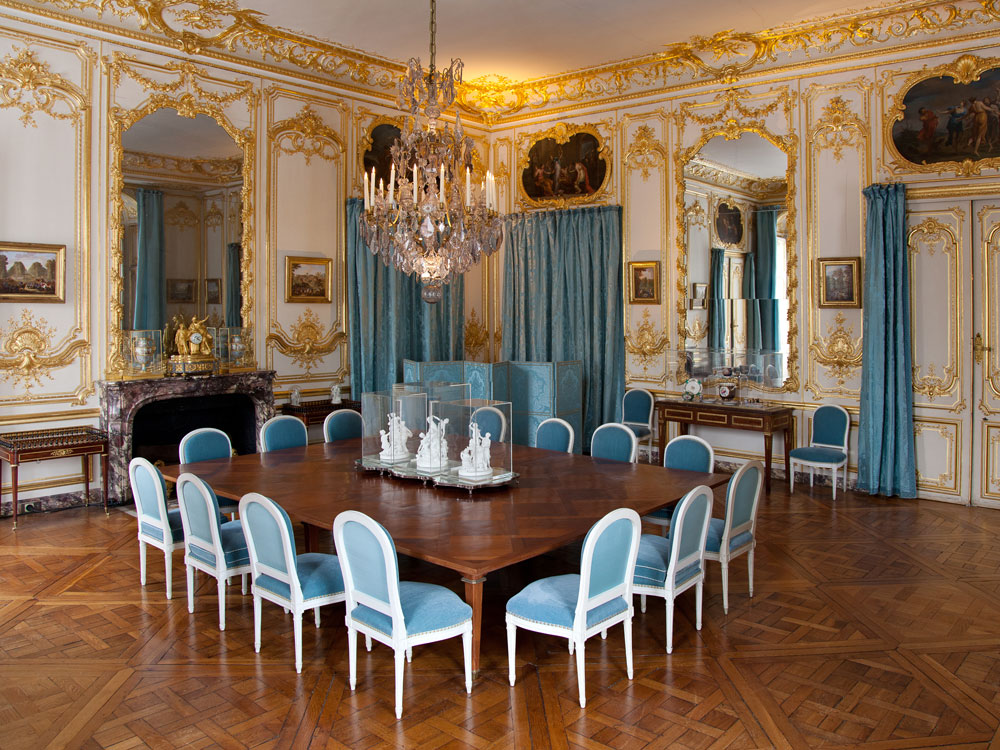
The Porcelain Dining Room
This dining room was created in 1769 during the reign of Louis XV for his post-hunt dinners. It occupies the former place of two rooms of the apartment of Madame Adélaïde, one of which opened onto the courtyard and constituted her Grand Cabinet, in which the young Mozart most likely performed before the royal family in early 1764.
The room was most used by Louis XVI and Marie-Antoinette. Over a period of 20 years, 40 or so guests were invited to sit around an extendible table for “society” meals. This new style of dinner was halfway between the official Royal Table and “private” meals. If the number of dinner guests exceeded the number of seats, the men went to the room next door where there was a buffet laid out on the billiards table. This dining room was also known as the Porcelain Room because Louis XVI used to present his latest pieces from the Sèvres manufacture here every year at Christmas.
Louis XVI’s Games Room
This room was originally Louis XIV’s Cabinet of Curiosities, which opened onto the Room of Plenty, of which nothing remains today. After serving several other purposes, it was eventually used by Louis XVI as a Games Room. After eating in the dining room, the guests came here to drink coffee and play games. The king enjoyed a good game of trictrac, while one of his brothers played billiards in the room next door, and the other whist.
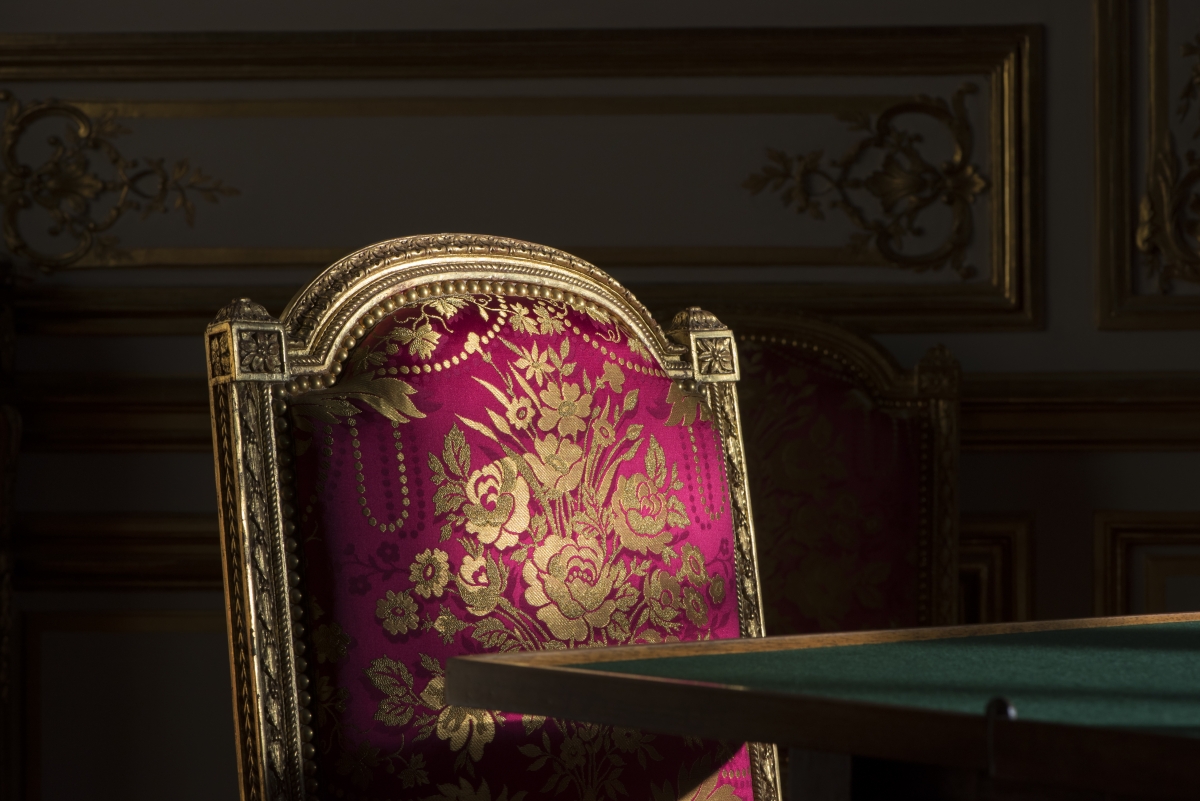
Although the furniture was sold off during the French Revolution, most of it has been bought back and restored to its original place, such as the four corner cupboards commissioned to Riesener in 1774 and the chairs built by Boulard in 1785. Works chosen by Louis XVI himself have been hung on the walls, including the watercolours commemorating the military victories of his grandfather, Louis XV, by Van Blarenberghe.