


PUBLIC TEXTILE

© Grand Palais Rmn (Domaine de Compiègne), Thierry Le Mage
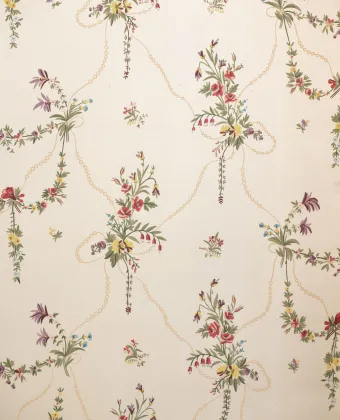
Name of the residence and name of the room:
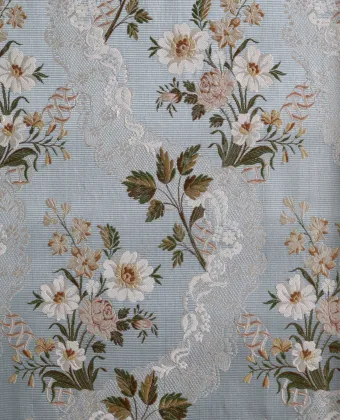
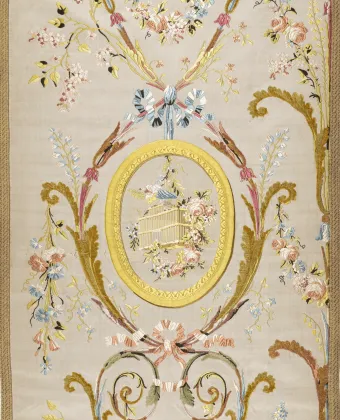
Palace of Compiègne, Queen's Game Room
Château de Compiègne, salon des Jeux de la Reine
Period of creation:
1786
Date of the reweaving:
1952-1956
Materials and technique:
Branch-patterned heathered tabby
Pattern unit:
Height: 297cm; Width: 68cm
Manufacturing location:
France, Lyon, Camille Pernon

© GrandPalaisRmn (Domaine de Compiègne) / Adrien Didierjean
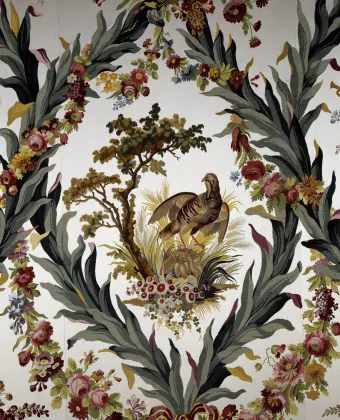
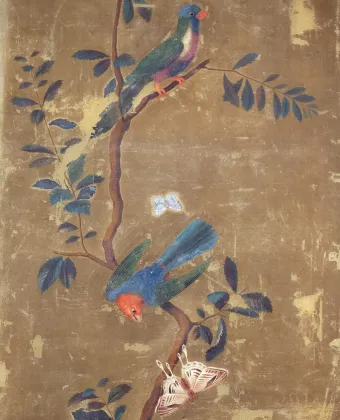
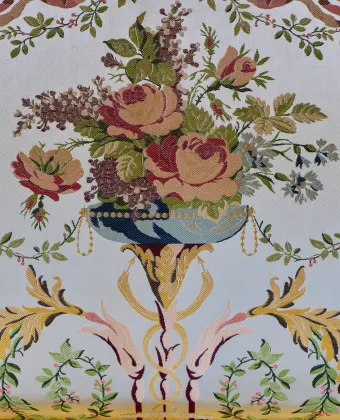
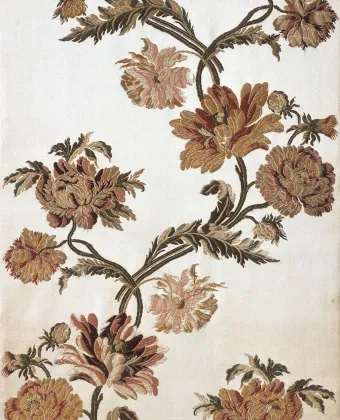
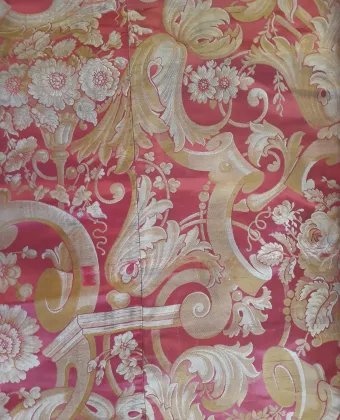
The creation of a new apartment for the Queen in Compiègne was accompanied by significant textile commissions. Next to her bedroom, the grand cabinet or games room features wall decorations that combine white-painted carved wood panelling with draperies bearing floral motifs rendered in a naturalistic style. The 1791 inventory describes a design “with arches and trees in foliage, at the foot of which are hollyhock plants.” In addition to the botanical theme’s suitability for this residence dedicated to hunting and summer pleasures, the design reflects the sovereign’s growing fondness for flowers and rustic decor. The flower spray pattern adorning the fabric of the seats, screen, and folding screen completes the impression of being in a pergola that extends into the neighbouring garden. The marled effect is also characteristic of 18th century tastes. It was achieved by partially dyeing the warp threads in small groups called “branches” before weaving. Delivered in 1786, this tabby was also used for the furnishings in the Nobles’ Room of the Queen’s apartment at the Palace of Saint-Cloud. Reconstructed using a fragment of curtains preserved by the Mobilier National (GMT.495), the fabric was re-woven in Lyon by the Volay workshops from 1952 to 1956. This marks the first restoration of a historical textile carried out in French castle-museums.
Persons associated:
Marie-Antoinette, Queen of France (1755-1793)
Thierry de Ville d’Avray, intendant of the Garde-Meuble (1732-1792)
Camille Pernon, creator (1753-1808)
Claude François Capin, upholsterer (1727-1789)
Bibliographic sources:
Gastinel-Coural, Chantal, « Notes et documents », in Soieries de Lyon, commandes royales au XVIIIe s., (1730-1800), catalogue d’exposition, Lyon, musée historique des tissus, décembre 1988-mars 1989, imprimerie Sézanne, Lyon, p. 74, n°47, p. 122
Verlet, Pierre, Le Mobilier royal français. Meubles de la Couronne conservés en France, 2e édition, t.I, Paris, 1990, p. 84-87
Privat-Savigny, Maria-Anne, Louis XVI et Marie-Antoinette à Compiègne, catalogue d’exposition, Compiègne, musée national du château, 25 octobre 2006-29 janvier 2007, p. 180
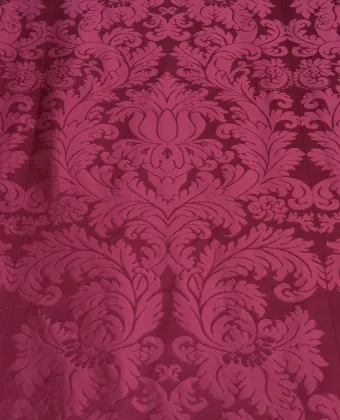
private textile

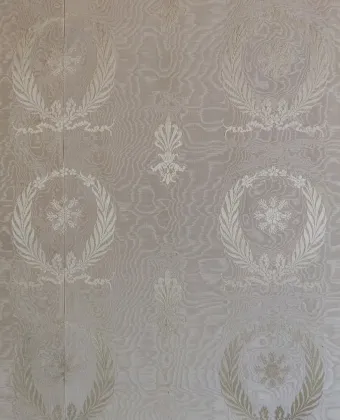
© Grand Palais Rmn (Domaine de Compiègne), Jean-Pierre Lagiewski
Name of the residence and name of the room:
Palace of Compiègne, Second Living Room of the Prince's Two-Bedroom Apartment
Château de Compiègne, deuxième salon de l’appartement double du prince
Period of creation:
1802
Date of the reweaving:
1988
Materials and technique:
Damask
Pattern unit:
Height: 8cm; Width: 54cm
Manufacturing location:
France, Lyon, Camille Pernon

© Grand Palais Rmn (Domaine de Compiègne), Stéphane Maréchalle
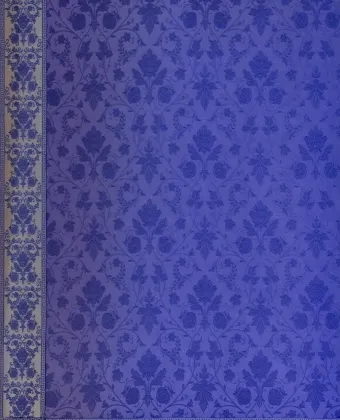
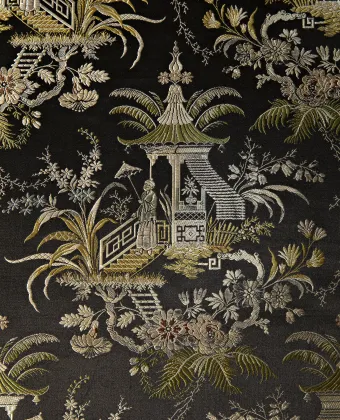
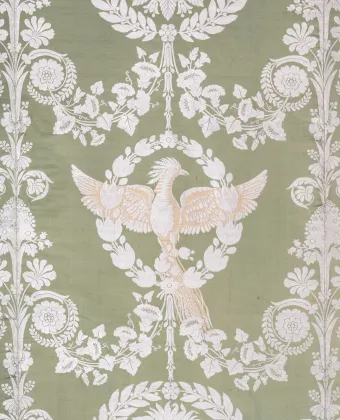
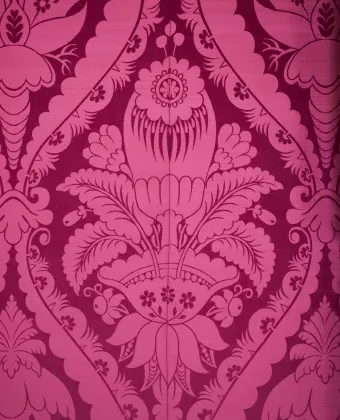
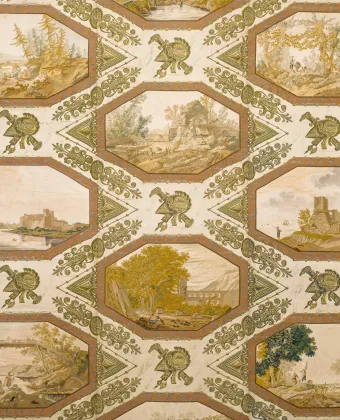
When Napoleon decided to reoccupy the Compiègne residence after the Revolutionary period, it was decided to draw on the reserves of the Garde-Meuble to quickly refurnish this new Imperial palace. Thus, the second salon of the apartment intended for a princely couple received a piece of furniture originally intended for Joséphine Bonaparte’s petit salon at the Palace of Saint-Cloud. Commissioned in 1802 by General Duroc, it was delivered to the Garde-Meuble between 1804 and 1807, but was never installed in that palace. It was therefore in Compiègne that it found its place starting in 1808. Against a gold background, the juxtaposition of a design of alternating diamonds and acanthus leaves with a vertical row of laurel leaves is highlighted by a shaded effect in the damask’s hue. The sense of volume imparted to the stretched fabric is reinforced by the first Greek key frieze arranged in an arch shape. The naturalistic treatment of the patterns in the second frieze contrasts with the regularity of the fabric’s stylized ornaments and stripes. The design is particularly bold, both for this trompe-l’œil effect and for the combination of beige and violet hues, which contrasts with the dark mahogany of the chairs, brings great brightness to this small room lit by a single window.
Persons associated:
Joséphine Bonaparte, Empress of France (1763-1814)
Géraud Christophe Michel Duroc, duke of Friuli, sponsor (1772-1813)
Camille Pernon, creator (1753-1808)
Jean-René Flamand, upholsterer (1760-1829)
Bibliographic source:
Coural, Jean, Gastinel-Coural, Chantal et Müntz de Raïssac, Muriel, Paris, Mobilier national, Soieries Empire, Paris, Réunion des musées nationaux, coll. « Inventaire des collections publiques françaises », n°25, 1980, p. 272-275
author
Etienne Guibert
Discover the Royal Palace of Compiègne
Royal Silks in Europe