


public textile

Name of the residence and name of the room:
Royal Palace of Naples, Ambassadors Room
Palazzo Reale di Napoli, Salone degli Ambasciatori
Period of creation:
19th century
Materials and technique:
Lampas
Manufacturing location:
Italy, Caserta, San Leucio Silk Factories

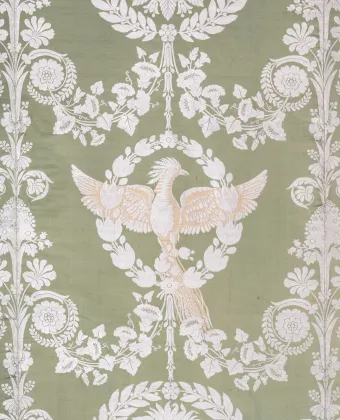
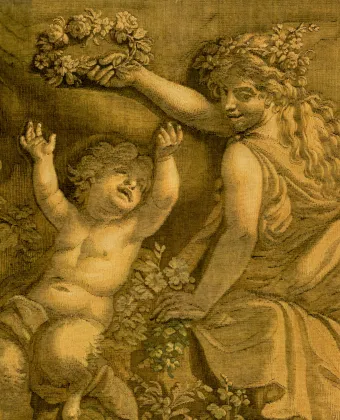
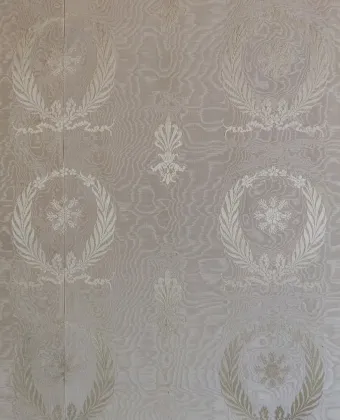
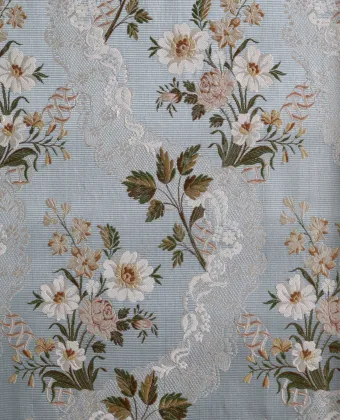
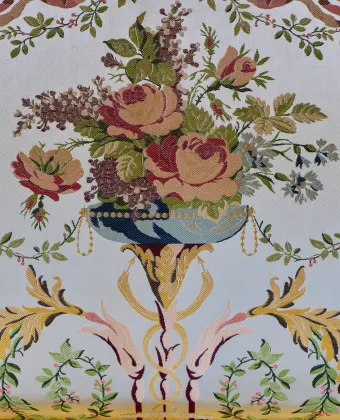
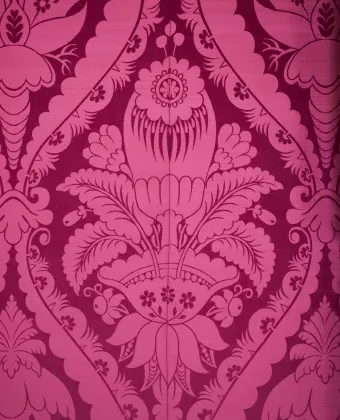
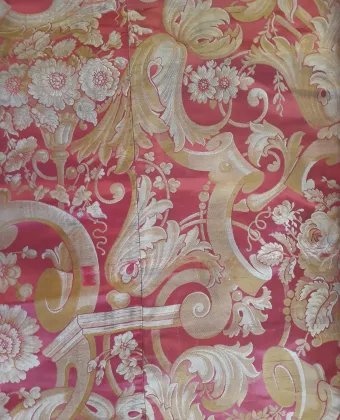
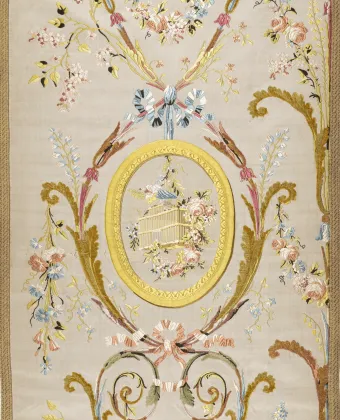
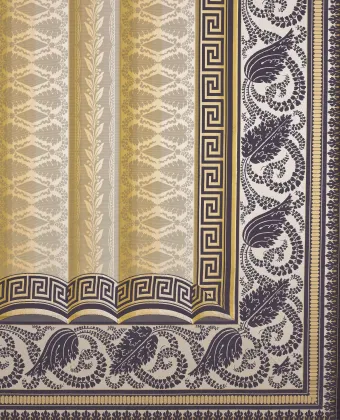
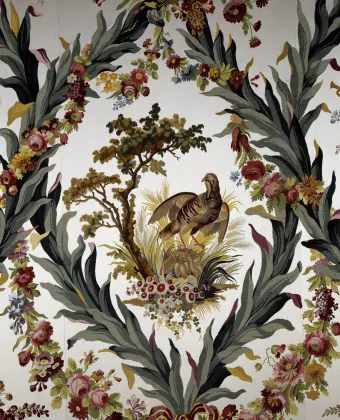
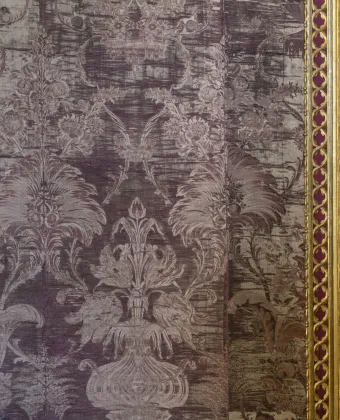
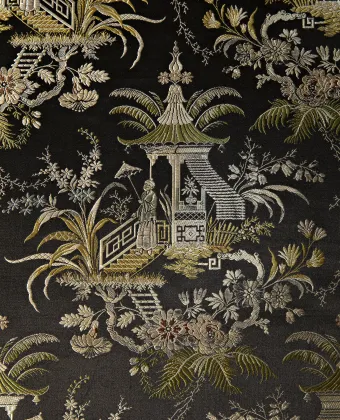
This lampas was woven in the 19th century by the San Leucio Silk Factories in Caserta, near Naples, to adorn the walls and furnishings of the Ambassadors Room. This salon forms part of the King’s Apartments and adjoins the Throne Room. Like the Throne Room, it overlooks a view of Piazza del Plebiscito. Originally, this salon was a passageway connecting the state rooms to the private apartments, known as the Grand Gallery, where numerous paintings were kept. When Ferdinand II decided in 1832 to transfer these works to the Bourbon Museum, it was transformed into a state salon and took the name of the Ambassadors Room. The fabric is adorned with a gold motif depicting a wreath of flowers, surmounted by ferns and framed by scrolls, on a blue background. The walls are also adorned with a series of tapestries by Louis Ovis de la Tour and the Gobelins Manufactory, on the theme of the History of Henry IV, dating from 1790 and acquired as prototypes for a series of tapestries intended to be woven in Naples and to adorn the royal estate of Carditello. The bombing during the Second World War and the subsequent military occupations caused very serious damage to the palace. The fabric has disappeared and has been replaced by a striped fabric.
Person associated:
- San Leucio Silk manufacturers
Bibliographic sources:
A. Porzio, La Quadreria di Palazzo Reale nell’Ottocento, Napoli 1999
A. Fiadino, Architetti a artisti alla Corte di Napoli in età Napoleonica, Napoli 2008
AA.VV., Il Palazzo Reale di Napoli, Napoli 2014
AUTHOR
Antonella Delli Paoli
Discover the Royal Palace of Naples
Royal Silks in Europe