


public textile

© Gallerie degli Uffizi
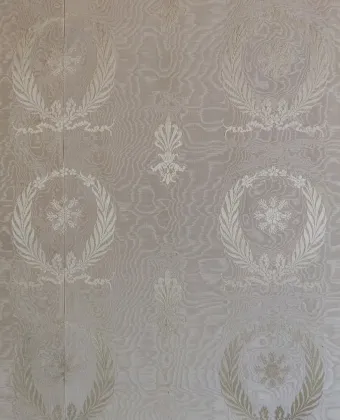
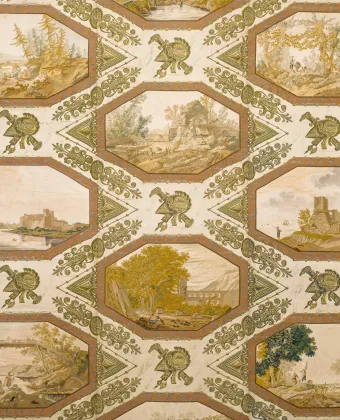
Name of the residence and name of the room:
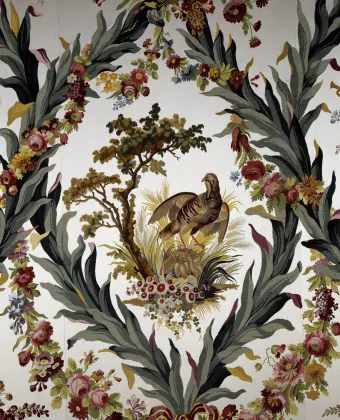
Pitti Palace, Royal Apartments, The Parrots Room
Palazzo Pitti, Appartamenti reali, Sala dei Pappagalli
Period of creation:
Second decade of 19th century, restored in early 1990’s
Materials and technique:
Satin, lampas (green, white and yellow)
Pattern unit:
Height: 226cm; Width: 72.5cm
Manufacturing location:
France, Lyon

© Gallerie degli Uffizi
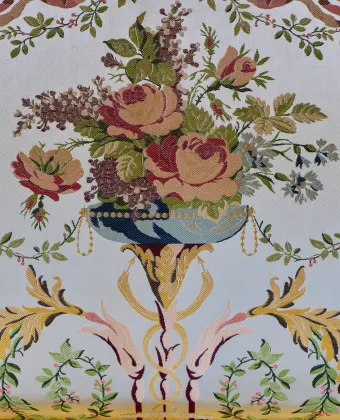
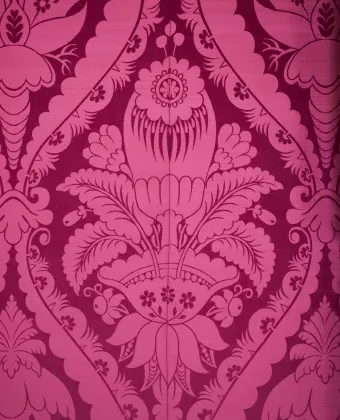
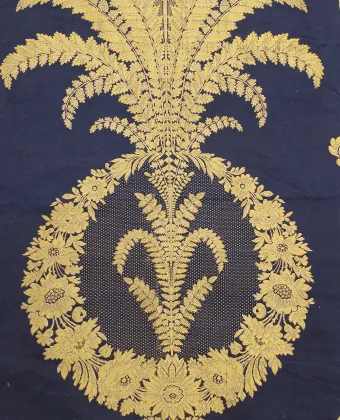
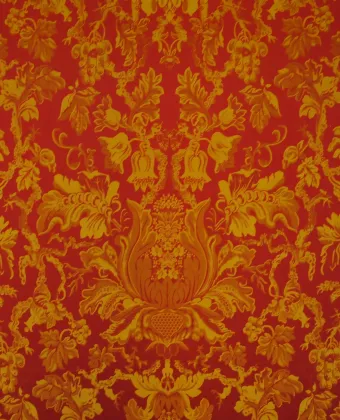
The textile was bought through his Great Chamberlain by Ferdinand III when in exile from Tuscany during the Napoleonic period. Although the reference to Napoleonic Empire is quite evident in the repetition of laurel wreaths inscribing stylized flowers and palmette or floral garland combined to eagles, on the Grand Duke’s return to Florence in 1814 it was meant to be mounted probably in a minor room of Pitti palace. It is uncertain whether this was the case or not while for sure archives statements register it was hung in the same room where it is nowadays in 1833 as part of a general refurbishment of the apartment planned on the occasion of the second marriage of Leopold II, the last ruling Grand Duke of Tuscany. As it is for another French textile dating back to Empire time, Leopold II decided to make use of this out of fashion in consideration of its high quality; however, the original meaning was somehow and maybe on purpose misunderstood giving origin to the curious name that is Parrots’ room, one of the saloon of the Royal Apartments.
Person associated:
Ferdinand III Habsburg - Lorraine, Grand Duke of Tuscany (1769-1824)
Bibliographic source:
Orsi Landini, Roberta, “Il quartiere delle stoffe”, in Gli Appartamenti reali di palazzo Pitti. Una reggia per tre dinastie: Medici, Lorena e Savoia tra Granducato e Regno d’Italia, Firenze, Centro Di, 1993, p.195-201
private textile

© Gallerie degli Uffizi
Name of the residence and name of the room:
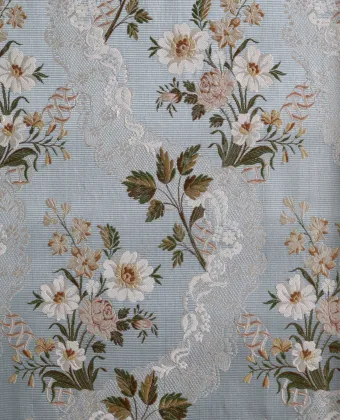
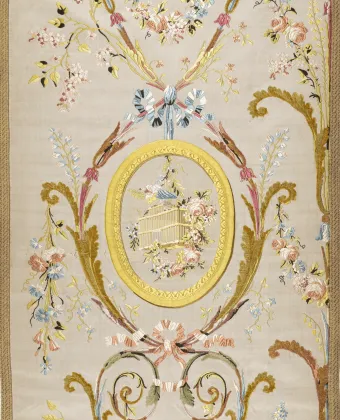
Pitti Palace, Royal Apartments, Queen’s boudoir
Palazzo Pitti, Appartamenti reali, Salottino della Regina
Period of creation:
1780-1783
Materials and technique:
Satin, embroidery in polychrome silk with details embroidered over adjacent satin panels
Pattern unit:
Width: 58cm (corresponding to one braccio fiorentino)
Manufacturing location:
Italy, Florence, Fabbrica Imperiale e Reale dei Drappi

© Gallerie degli Uffizi
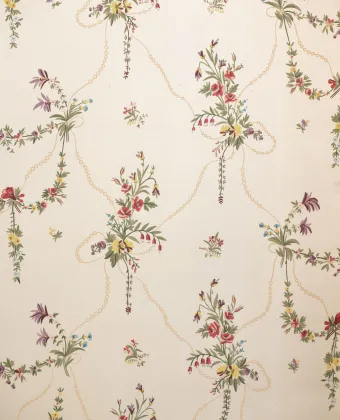
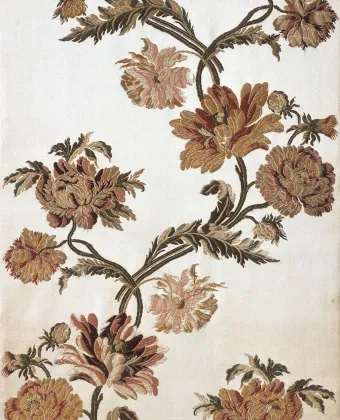
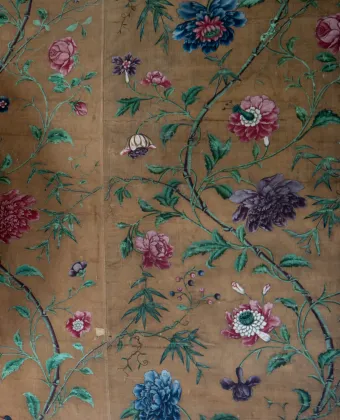
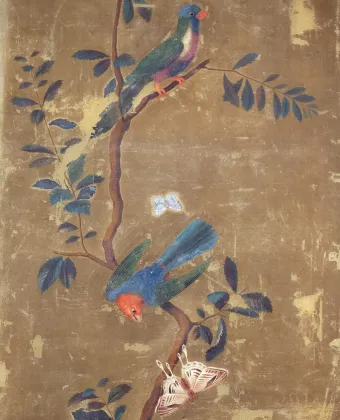
The textile decorates the so-called Oval Cabinet in the Royal Apartments being specially woven and embroidered for this destination. Although this is not the original one, hung around 1765 and later lost, it suits perfectly the shape of the room and the stuccoed ceiling in Rococo style, given its design of trees, flowers, foliage, butterflies and exotic birds in the chinoiserie taste. At the same time, it complied with the white and yellow predominant colours chosen for Maria Luisa di Bourbons-Spain, Grand Duchess of Tuscany as wife of Pietro Leopoldo Habsburg – Lorraine, who used the cabinet as a private study and boudoir. The pearly white satin was woven in the Fabbrica Imperiale e Reale dei Drappi, founded in Florence in 1757 by the first Grand Duke of the Lorraine dynasty, Francesco Stefano, father of Pietro Leopoldo. A new manufacture born with the purpose of reviving the prospects of the traditional Tuscan textile production which dating back to Middle Ages entered into crisis during the 18th century as a consequence of other countries competition and the decline of the Medici family whose final Grand Duke died in 1737. The embroidery was made in Rosa Migliorati’s workshop after the design of her husband Paolo; archives document refer that the project was accomplished in three years, from 1780 to 1783, involving seventeen permanent workers and several apprentices. In 1886-1887 the 18th century embroidered textile inspired the design of a set of chairs destined to the same room, realized under the guidance of a certain De Trombetti by the pupils of the Leopoldine schools, founded by Pietro Leopoldo at the end of the previous century for less affluent young Florentines.
Persons associated:
Pietro Leopoldo Habsburg - Lorraine, Grand Duke of Tuscany (1747-1792);
His wife Maria Luisa di Bourbons-Spain (1745-1792);
Paolo Migliorati, designer;
Rosa Migliorati, embroiderer
Bibliographic sources:
Worsdale, Derrick, in Curiosità di una reggia. Vicende della guardaroba di Palazzo Pitti, exhibition catalogue, Florence, 1979 p.246
Landini, Roberta, “Le commissioni di sete alle manifatture fiorentine dell’Imperiale e Real Corte di Toscana dal 1765 al 1799”, in I tessili antichi e il loro uso: testimonianze sui centri di produzione in Italia, lessici, ricerca documentaria e metodologica, Acts of the symposium, Torino, 1984, Torino, 1986, p.227-247
Westerman Bulgarella, Mary, “Gli interventi di conservazione sulle tappezzerie di Palazzo Pitti”, in Le tappezzerie nelle dimore storiche, Acts of the symposium, Firenze 1987, Umberto Allemandi, Torino, 1988, p.56-61
authors
Alessandra Griffo
Lucia Nucci
Discover the Pitti Palace (The Uffizi)
Royal Silks in Europe