


public textile

© Reggia di Caserta, M. Ferraro
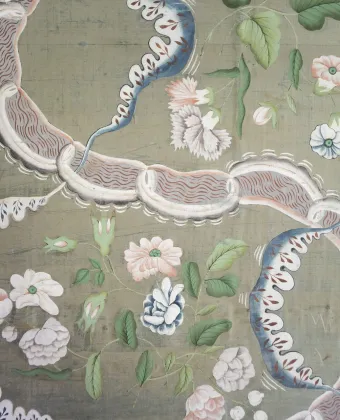
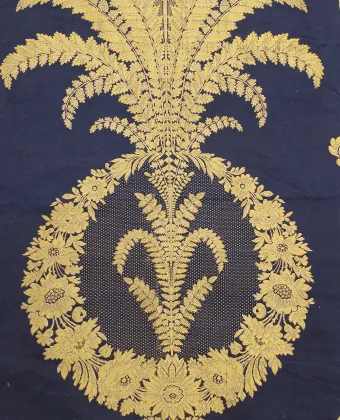
Name of the residence and name of the room:
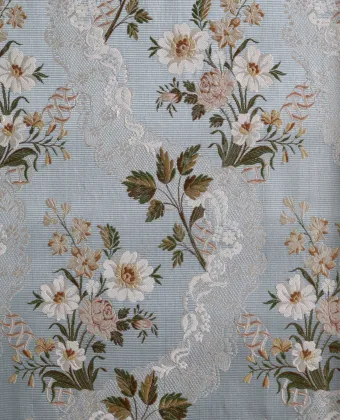
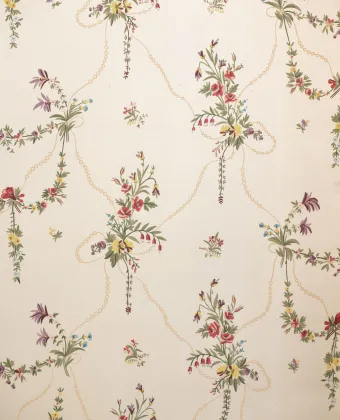
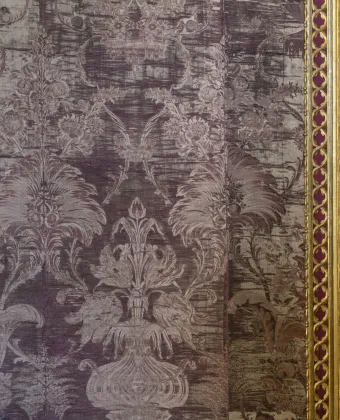
Royal Palace of Caserta, The Council Chamber
Reggia di Caserta, Sala del Consiglio
Period of creation:
1814
Date of the reweaving:
ca. 1970
Materials and technique:
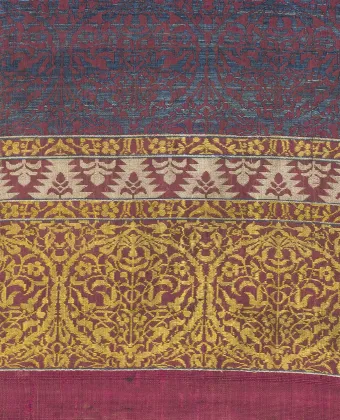
Ermisino silk
Pattern unit:
Height: 25cm; Width: 25cm
Manufacturing location:
Italy, San Leucio, Caserta

The Council Chamber of the Royal Palace of Caserta was designed by Luigi Vanvitelli as a space for the King’s meetings with his court. Located immediately next to the Throne Room, it is situated in the wing of the Palace renovated at the request of Joachim Murat after his appointment as King of Naples.
The ceiling was decorated by Agostino Fondi and Giuseppe Cammarano, while the walls, curtains, and furniture upholstery were covered with a precious fabric: Ermisino silk produced by the Royal Manufactures of San Leucio. This site, owned by the Bourbons, was transformed into a place of royal leisure, entertainment, and delight.
The origins of this activity date back to 1758, when Queen Maria Amalia, wife of Charles of Bourbon, introduced silkworm breeding. The silkworms were raised in the “Casino al Boschetto,” while the silk was reeled manually by the families of the custodians of the San Leucio Forest.
The fabric currently covering the walls is the same as that used for the Neapolitan-made sofas and armchairs dating to around 1826. These furnishings were therefore produced after Murat’s renovations; however, the involvement of the same craftsmen — including Antonio De Simone as court architect, assisted by Gaetano Genovese and Pietro Persico — demonstrates a continuity in stylistic choices inspired by the Empire style introduced by the Murats and later appreciated by the Bourbon rulers of the Restoration.
Person associated:
- Italy, San Leucio, Caserta
Bibliographic sources:
Fiadino, Architetti e artisti alla corte di Napoli in età napoleonica, Electa, Napoli, 2008, p. 94
Colle, E., Gli stili a corte: l’evoluzione del gusto degli appartamenti reali della Reggia di Caserta da Ferdinando IV a Francesco II, in Casa di Re. Un secolo di storia alla Reggia di Caserta 1752-1860, Skira, Milano, 2004, p. 39-53
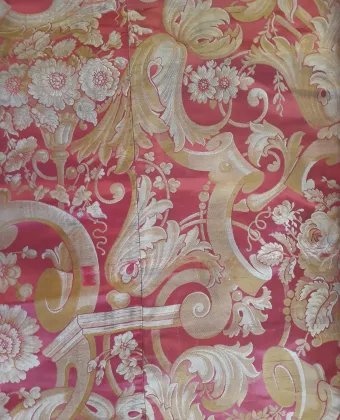
private textile

© Reggia di Caserta, M. Ferraro
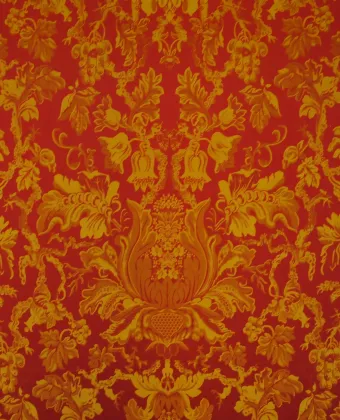
Name of the residence and name of the room:
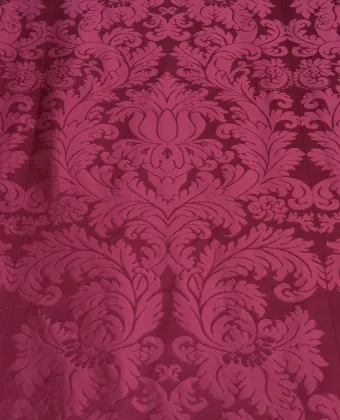
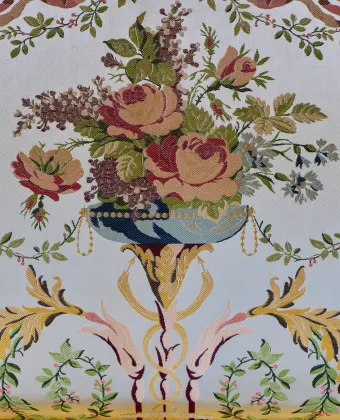
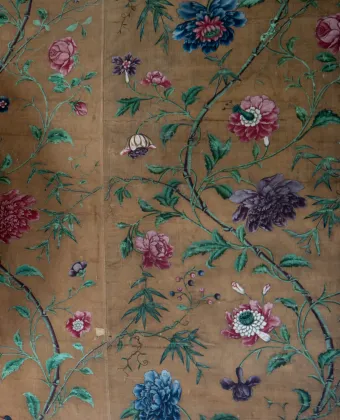
Royal Palace of Caserta, Joachim Murat’s Bedchamber
Reggia di Caserta, Camera da letto di Gioacchino Murat
Period of creation:
1815
Date of the reweaving:
2020
Materials and technique:
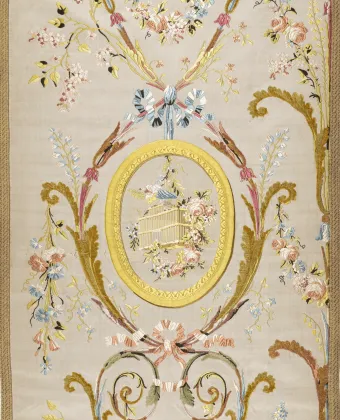
Silk, tabby
Pattern unit:
Height: 112cm; Width: 95cm
Manufacturing location:
Italy, San Leucio, Caserta

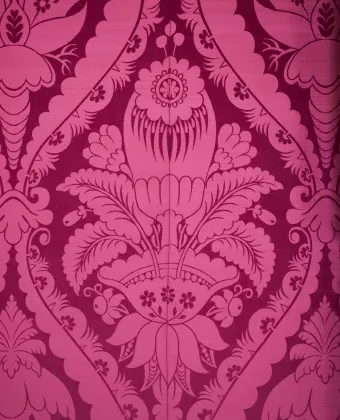
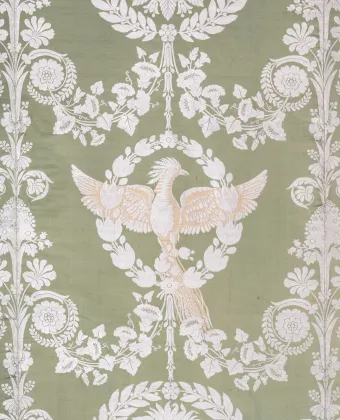
The so-called Murattiano Apartment of the Royal Palace of Caserta was set up for the French conquest of the Kingdom of Naples, at the beginning of the 19th century, when Joachim Murat lived in the Palace: the rooms are all in neoclassical style and the walls covered with San Leucio silks.
Built around 1815 for Murat's room in the palace of Portici, the bed with canopy was transferred with two coffers and as many bedside tables to the Royal Palace of Caserta around the mid-nineteenth century. On that date it was in fact described in the inventory of the royal residence in Caserta as a mahogany bed garnished with carved and gilded wooden ornaments with a curtain similar to the covering of the walls with a blue fabric and white striped silk, lined with white taffeta garnished with high fringe silk-crafted. The original striped fabric of the bed and the central crown that supported it were replaced after 1835: in this year, in fact, the furniture was inventoried in Portici for the last time as it appeared at the beginning of the century.
In 2020 the fabrics were replaced due to the very poor bed's conditions, because after analyzing the materials, their industrial production was highlighted. 100 meters of silk satin and 100 meters of taffeta supplied by the San Leucio Textile network, a San Leucio silk protection brand, an excellence of the area, were used in collaboration with the Chamber of Commerce of Caserta.
Persons associated:
San Leucio Textile
Joachim Murat, king of Napoli (1767-1815)
Bibliographic sources:
Lady Morgan, Voyage en Italie, voll. I-IV, Paris, 1821: IV, p. 159-165
Colle, E., Il mobile Impero in Italia. Arredi e decorazioni d’interni dal 1800 al 1843, p. 29 and p. 64-65
Morazzoni, G., Il mobile neoclassico italiano, Milano, 1955, tav. CCLX
authors
Valeria Di Fratta
Emilia Ludovici
Discover the Royal Palace of Caserta
Royal Silks in Europe